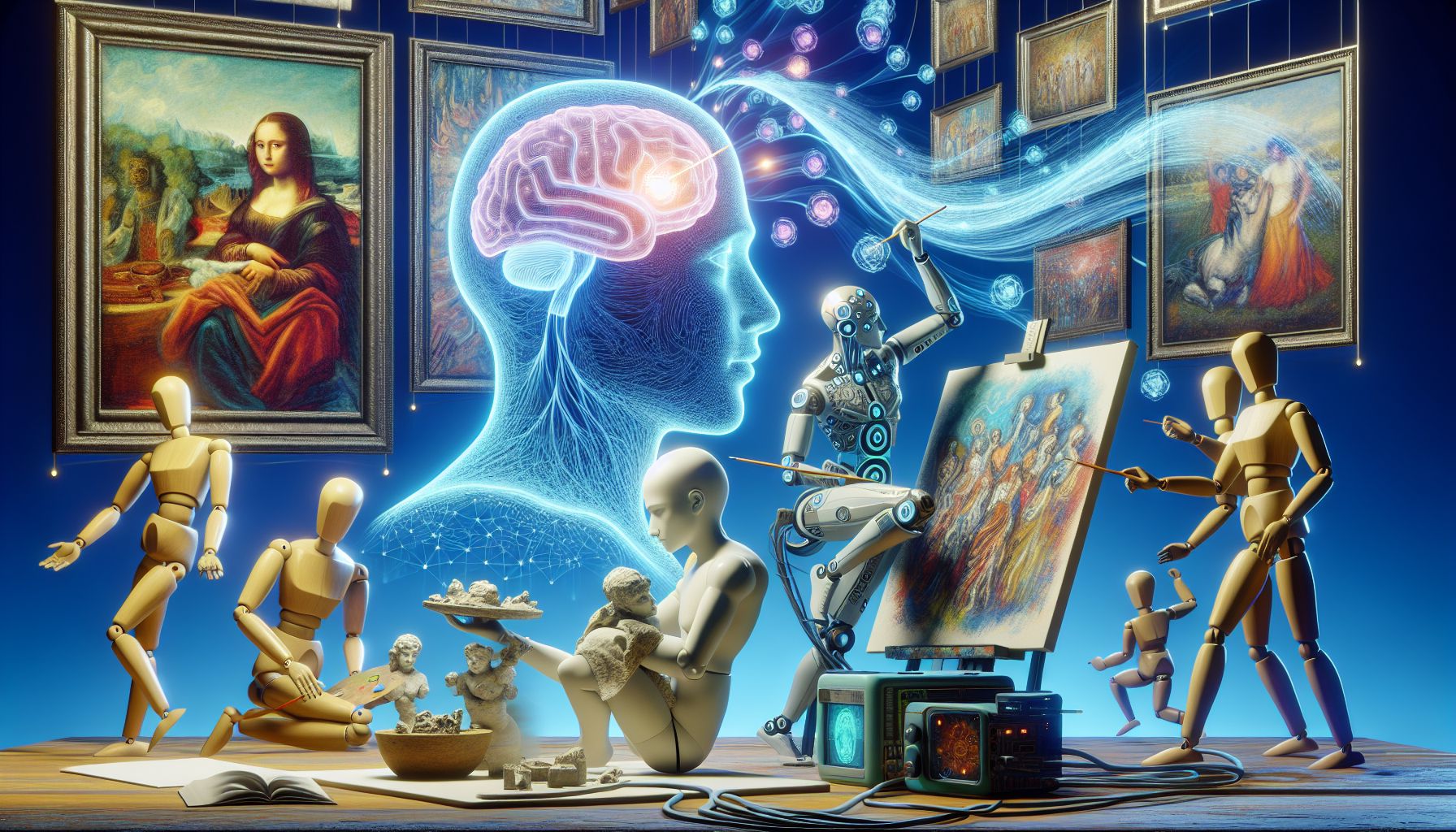
You can’t scroll through art news these days without seeing AI pop up somewhere. Whether it’s a computer-generated piece selling for millions at auction or another heated debate about robot creativity, artificial intelligence has definitely crashed the art party. And honestly? I think it’s pretty fascinating how these algorithms are changing what we consider “art” in the first place.
How AI Actually Makes Art
Remember when AI was just something from sci-fi movies? Now it’s creating paintings that hang in galleries. The whole thing works through deep learning models and neural networks that basically gorge themselves on thousands of images, learning patterns, styles, and artistic techniques. Then they use all that knowledge to create something new.
Neural Networks Learn Like Brains (Sort Of)
These neural networks copy how our brains work, making connections between different pieces of visual information so they can “learn” from what they see. Google’s DeepDream was one of the early examples that really caught people’s attention. It takes regular photos and reveals these weird, hidden patterns that create surreal, dreamlike images. The results are often bizarre and captivating at the same time.
But the technology has gotten way more sophisticated since then. Now we have Generative Adversarial Networks, or GANs, which are pretty clever. They use two neural networks that basically compete with each other. One creates images while the other judges them, and through this back-and-forth process, GANs can produce artwork that’s surprisingly good. Sometimes you can’t even tell it wasn’t made by a human.
Artists Get New Digital Tools
For working artists, AI has opened up creative possibilities that didn’t exist before. Picture having an AI assistant that can suggest color palettes, generate entire series of digital paintings, or even help design sculptures, all customized to your style but with its own unique spin. Some digital artists now use algorithms like they’re just another brush in their toolkit.
How AI Changes the Creative Process
AI isn’t just another art supply sitting on the shelf. It’s actually changing how artists approach their work, though not always in the ways people expect.
Working Together Instead of Competing
Some really interesting artists are treating AI as a creative partner rather than a threat. Refik Anadol turns massive data sets into these incredible immersive installations that make you think about memory and digital consciousness. Sougwen Chung actually paints alongside robotic arms, creating this intimate human-machine collaboration where you can see both influences in every brushstroke.
Instead of replacing artists, AI often handles the tedious stuff so humans can focus on the big-picture creative decisions. Artists can tackle projects that would have been impossible before because of time constraints or technical limitations.
Making Art More Accessible
Tools like DALL-E, Midjourney, and Runway ML have made it possible for pretty much anyone to create impressive artwork. You type in a description, and the AI generates images, animations, or designs that look professional. It’s wild how easy it’s become.
This accessibility is breaking down traditional barriers in creative fields. You don’t need years of training or expensive equipment anymore. Marketing teams, filmmakers, musicians, and regular people with cool ideas can all create visual content that used to require specialized skills.
The Messy Questions AI Art Raises
Of course, mixing AI with art creates some complicated problems that we’re still trying to figure out. Who actually “owns” a piece of art when an AI helped create it? When a neural network can mimic someone’s style perfectly, what does that mean for originality?
Who Gets Credit?
The whole question of creative ownership gets really murky when AI is involved. Our current copyright laws weren’t designed for collaboration between humans and machines, so there’s a lot of legal gray area that needs sorting out.
There’s also the issue of AI systems learning from existing artworks. Sometimes they might accidentally copy an artist’s signature style too closely, which raises questions about artistic theft. Can a machine truly innovate, or is it just endlessly remixing what it’s seen before?
What Does “Creative” Even Mean?
Maybe the biggest question is whether creativity is uniquely human or something that can be programmed. As AI gets better at making art that moves us emotionally, we’re forced to reconsider what creativity actually is. There’s no universal answer, and different cultures will probably see this differently.
Where We Stand Now
AI is definitely shaking up the art world, and while it’s creating some thorny questions about authorship and authenticity, it’s also opening up amazing new possibilities for creative expression.
We’re living through this shift right now, watching AI evolve from a simple tool into something that feels more like a creative partner. It can’t replace the human soul behind art, but it’s certainly changing how we think about making it.
The AI art revolution isn’t some distant future concept. It’s happening in studios and galleries today, and we’re just getting started.