What Just Changed (and Why You Need to Care)
Here’s the thing nobody wants to hear: showing up at the airport with your passport and a vague sense of European wanderlust isn’t enough anymore. The EU’s European Travel Information and Authorisation System, or ETIAS, went live in 2025, and it fundamentally changed how Americans, Canadians, and UK citizens enter the Schengen Zone. This isn’t a visa replacement. It’s a pre-travel authorization you’re now required to get before you board that flight to Barcelona or Prague.
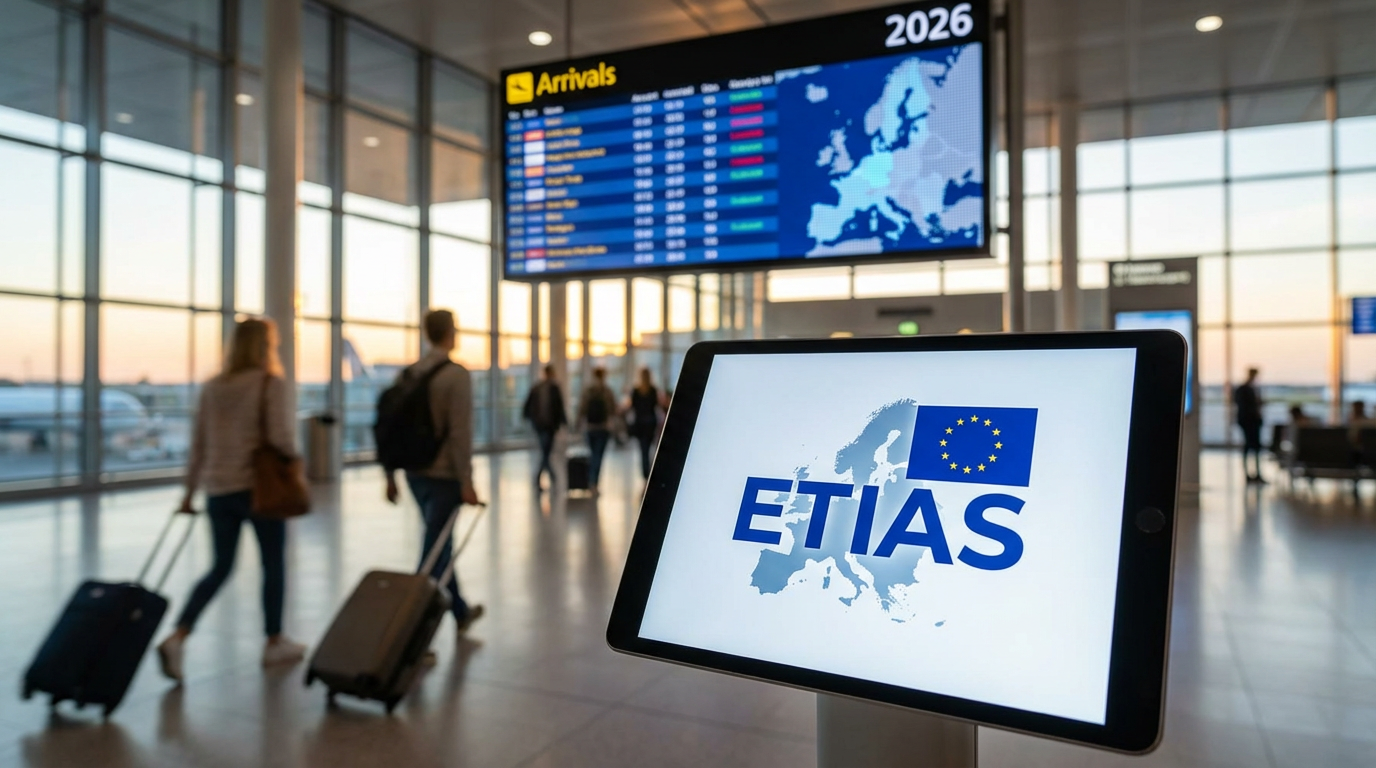
For decades, citizens from roughly 60 visa-exempt countries could waltz into Europe with nothing but a passport. No forms, no fees, no digital bureaucracy. That era is over. Now you need to secure an ETIAS authorization beforehand, and the cost is seven euros per application, valid for three years. The system applies to over 1.4 billion people globally, but US, Canada, and UK travelers are who we’re talking about here. If you’re planning a trip in 2026, this affects you.
What makes this worth paying attention to is the enforcement. Airports like Paris Charles de Gaulle and Amsterdam Schiphol aren’t messing around. Show up without a valid authorization and you’re getting turned away at the border. Not rebooked. Not warned. Turned away.
How to Actually Get Your ETIAS Authorization
The good news is that the application process is painfully straightforward. You apply online through the official system, answer some basic security questions, provide passport information, and submit. The whole thing takes about ten minutes if you’re not the type to read every question twice. The EU Commission projects that 96% of applications get approved automatically within minutes, meaning most people won’t even know what bureaucratic rejection feels like.
You’ll need your passport number, an email address, and either a credit or debit card for the seven-euro fee. Head to the Official EU ETIAS travel authorization portal and start the application. There’s no waiting period for standard approvals. You can technically complete this the day before your flight, though obviously, don’t do that.
Once approved, the authorization is tied to your passport number and valid across the entire Schengen Zone, covering entry into any of the 27 EU member states plus a handful of associated countries. One authorization, multiple countries. This is actually where ETIAS gets convenient if you’re planning a longer stay and hopping between cities over weeks or months.
If You’re Coming from the UK, There’s a Twist
British travelers have their own version of this situation. The UK rolled out its own ETA scheme mirroring ETIAS, and it expanded to EU nationals in April 2025. If you’re a UK citizen traveling to Europe, you need ETIAS. If you’re an EU citizen traveling to the UK, you now need the UK’s ETA scheme at ten pounds per application. Same concept, different sides of the channel.
The UK Home Office spelled out the details, and they’re worth checking if you’re moving between both systems. The application process is similar, the fees are comparable, and the enforcement is identical. For long-stay travelers planning to bounce between the UK and EU multiple times over a year or two, you’re now managing two separate authorizations. It’s not complex, but it’s worth having on your radar when you’re budgeting travel admin time.
Head to UK Home Office ETA scheme details if you need specifics on the British side of things.
What This Means for Your Long-Term European Plans
If you’re thinking about spending three months in Portugal or a season bouncing between Vienna, Prague, and Budapest, here’s what matters: your ETIAS authorization covers the entire duration as long as your passport doesn’t expire and you’re not staying beyond the ninety-day limit in any 180-day period. That ninety-day cap is pre-ETIAS law, not new, but it’s worth remembering. ETIAS doesn’t give you longer stays. It just makes entry simpler.
What ETIAS actually does is streamline the arrival process. You’re not fumbling through customs with paperwork. You’re not explaining your extended plans to border officers who don’t care. Your authorization is already in the system. You show your passport, they scan it, and you move on. When you’re trying to catch a train to your next city or you’re exhausted from a long flight, that efficiency matters more than you’d expect.
The bigger picture is that Europe is getting serious about knowing who’s entering. ETIAS gathers security information upfront, flags anything concerning before you arrive, and generally keeps the border experience smoother for everyone. Think of it as an advanced reservation for entry. You’re telling them you’re coming, they check you out, and when you show up, they already know who you are.
The Final Logistics Check Before You Book
Here’s your checklist before you hit “purchase” on those 2026 flight tickets: make sure your passport is valid for at least six months beyond your travel dates. ETIAS ties to your passport number, so the document needs to be active and unchanged. If you’re renewing your passport before your trip, apply for ETIAS after you have the new one in hand.
Budget the seven euros, set a reminder to apply two weeks before departure, and don’t wait until you’re in the airport parking lot. Approvals are fast, but “fast” and “guaranteed” aren’t the same thing, and there’s no reason to manufacture stress. Fill out the application honestly. If you’ve got security flags in your background, the system might catch them, and you’d rather know that now than at the departure gate.
Have you already gone through the ETIAS application process, or are you planning a European trip for 2026? Drop a comment below about your experience or any questions you’ve got. I’ve tested this system myself, and I’m genuinely curious how other travelers are finding it.