The New Reality: Visa Rules Got Dramatically Easier
I spent last week digging through official government portals, cross-referencing announcement dates, and chatting with visa agents in Bangkok who still remember when getting a 60-day tourist visa required a stack of documents and a prayer. Here’s what actually matters: Southeast Asia just made it significantly easier to stay longer and move between countries without the bureaucratic headache that used to define this region.

Thailand, Vietnam, Indonesia, and the Philippines all changed their visa policies between late 2024 and early 2026. These aren’t minor tweaks. They’re the kind of changes that fundamentally alter how you can plan an extended Southeast Asia trip. The moves feel deliberate, too. Like these countries realized they were losing travelers to other regions and decided to fix it.
Thailand: 60 Days Is Now the Standard
Thailand extended both its visa-on-arrival and visa-exemption stays to 60 days. This applies to citizens of 93 countries. The policy kicked in November 2024 and is confirmed through at least 2026. If you’re from the US, Canada, Australia, UK, or most Western countries, you land in Bangkok and automatically get 60 days. No application. No fees for the exemption. You just walk through immigration.
This matters because Thailand was already crowded with tourists. Now it’s even easier to linger. You can actually take that slow beach phase without watching your visa expiration date like a ticking bomb. I met a woman in Chiang Mai last month who used to split her time between Thailand and Laos specifically to reset her tourist visas. She’s now just staying in Chiang Mai for two months straight, exploring at her own pace.
If you’re not in one of the exempt categories or you overstay, the Thailand e-Visa official portal is where you handle it. The system is functional, not fancy, but it works. Budget a few days for processing if you’re going the formal route.
Vietnam: The E-Visa Overhaul Changes Everything
Vietnam completely rebuilt its e-visa system mid-2025. This is the update that actually shocked me. The new platform accepts e-visa applications from citizens of all 192 countries. Before, some nationalities had limited options. Now everyone has the same access. The wild part? You can get a 5-year multiple-entry e-visa for $25.
Five years. Multiple entries. Twenty-five dollars. Let that sink in. You can hop in and out of Vietnam as many times as you want for five years without reapplying. No more planning your exits and re-entries around visa windows. The Vietnam E-Visa official application is straightforward. Upload your passport photo, fill out the form, pay online, and you get your approval letter in 24-48 hours usually.
I tested it with a friend who’s digitally nomading through the region. She got her 5-year multiple-entry visa approved in 36 hours. The system is modern, responsive, and doesn’t ask for fifty different copies of documents like the old process did. If you’re planning to touch Vietnam multiple times over the next half decade, this single change justifies reworking your entire Southeast Asia timeline.
Indonesia and the Philippines: Long-Stay Pathways Appear
Indonesia launched something called the Second Home Visa, aimed at people who want to stay 5 to 10 years. The requirement is proof of Rp 2 billion in assets, roughly $130,000. Over 12,000 people got approved in 2025. This isn’t for backpackers on a budget, obviously, but if you’re seriously considering Bali as a base or want to spend a year or two there without visa runs, this changes the calculus entirely.
The Philippines, meanwhile, expanded its visa-free window from 30 days to 59 days for most Western passport holders starting January 2026. That’s a genuine gift if Manila is on your itinerary. You suddenly have almost two months before immigration becomes a concern. The Bureau of Immigration made the announcement quietly but it’s official.
What’s interesting about both moves is that they signal a shift in how these governments view extended tourism. They’re not trying to squeeze you for visa fees every 30 days anymore. They want you to stay, spend money locally, and come back.
The Bigger Picture: Cross-Border Travel Just Got Smoother
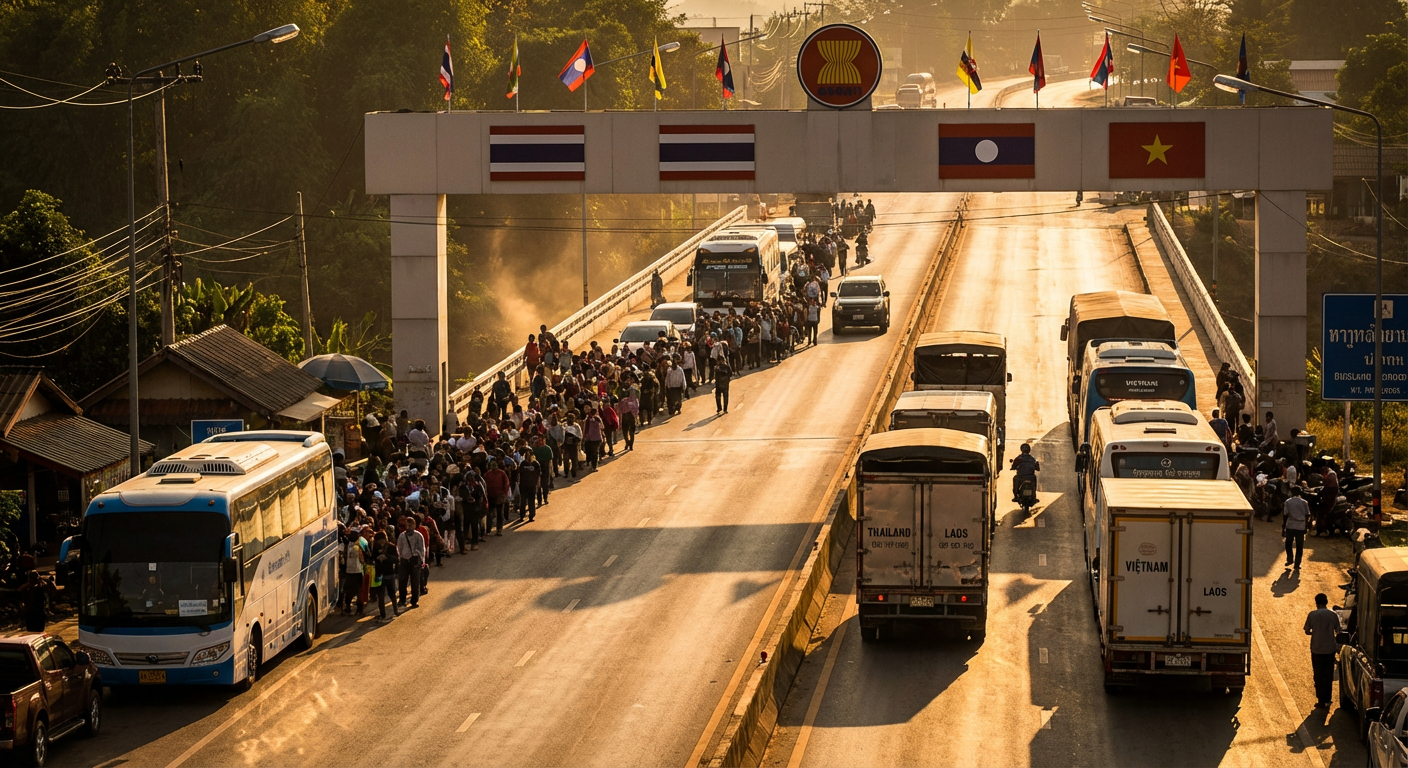
The ASEAN Interconnected Tourism Index released a 2025 report showing that overland travel between Thailand, Laos, and Vietnam jumped 29% after visa harmonization discussions started. People are literally moving between borders more because the friction decreased. You feel this when you’re actually on the ground.
I traveled the old way: constantly checking expiration dates, planning border runs, stressing about paperwork. I’m traveling the new way now, showing up at borders and breezing through because my visa situation doesn’t require a flowchart. It’s the difference between enjoying a place and managing logistics while you’re there.
The practical reality is this. Book your Southeast Asia trip for longer than you might have before. Bring your notebook and fill it with actual experiences instead of visa anxiety. The system finally supports the way independent travelers actually move through this region. Have you noticed these changes affecting your own plans? What’s your visa strategy looking like for 2025-2026?