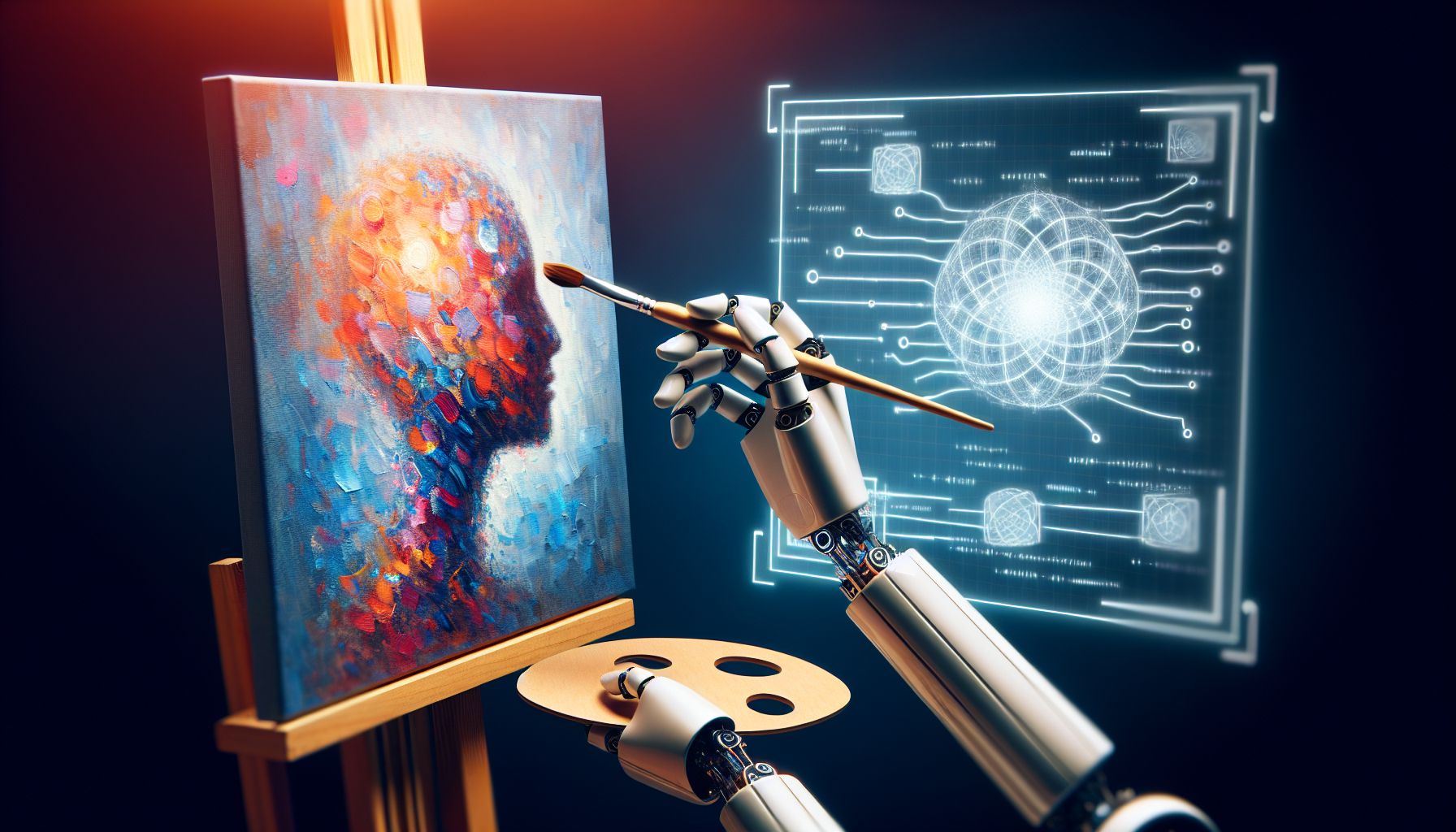
Hey there, fellow tech enthusiasts! Today, I’m diving into a hot topic that’s been all the buzz in the tech community: AI in creative arts. Picture this: a world where artificial intelligence doesn’t just analyze and optimize but creates and inspires. Sounds like an episode of Black Mirror? Maybe, but it’s happening right now. AI isn’t just for geeks in lab coats or sci-fi dreamers anymore. It’s working alongside artists, poets, and musicians. Grab a cup of coffee (or a can of energy drink, your call!) and let’s explore this messy, exciting collision between machine intelligence and human creativity.
AI Takes the Stage
Let’s rewind a bit. Remember just a few years ago when AI mostly meant clunky chatbots and voice assistants that couldn’t understand your accent? Fast forward to today, and we’ve got AI creating art that could hang in a gallery next to a Van Gogh. It’s wild, honestly.
Meet the AIs: Artists of the Digital Era
We can’t talk about AI in creative arts without giving a shoutout to some rockstar AI tools. OpenAI’s DALL-E can spit out images based just on text input. Type “a futuristic cityscape with rainbow giraffes,” and boom, it’s on your screen in seconds. Then there’s DeepArt, which transforms your ordinary selfies into dramatic, impressionist-style masterpieces that look like they belong in a museum.
It’s tempting to dismiss these AIs as fancy gimmicks, but that doesn’t really capture what they’re doing. They’re not just copying existing art. They’re creating something new based on patterns and styles pulled from massive datasets of human-made work. The results can be surprisingly original.
Where AI Art Shines
What gets me excited is how AI approaches creativity from angles humans might never consider. While we’re stuck thinking about artistic conventions and what’s “supposed” to look good, AI just… doesn’t care. Sometimes that indifference produces something genuinely fresh.
Breaking Creative Blocks with Algorithms
One of my favorite examples comes from the music world. Ever heard of AIVA? It’s not a pop star’s stage name but an AI that composes symphonies. Trained on classical music, it now produces film-score-worthy compositions. Composers use AIVA to break through creative blocks, mixing machine-generated ideas with human intuition.
Having AI as a creative partner is like brainstorming with someone who never gets tired and has zero filter. Need inspiration for a graphic novel? AI can generate hundreds of scene ideas until something sparks. It’s collaboration, not replacement.
Beyond the Brushes and Beats
The implications here are huge. Some people are thrilled about this shift. Others are worried, and honestly, I get both reactions. Major technological changes always split people down the middle. Remember how divided everyone was when the internet first showed up?
Who Owns AI Art?
Here’s where things get legally messy. If an algorithm creates a painting, who owns the copyright? The programmer who built it? The person who typed the prompt? Some futurists even suggest AI might need its own legal rights someday. Can you imagine AI Picasso filing for royalties?
Then there’s the deeper question about value. Art has always been special because of its human connection, the emotion between creator and creation. Can AI art carry the same weight? I’m honestly not sure we know yet.
The Ethics Get Complicated
With great power comes great responsibility, and AI art raises some serious questions. How do we prevent AI from amplifying existing biases in art and culture? What happens when AI-generated works flood the market and potentially drown out human artists? We’ve already seen AI pieces win art competitions, causing major controversy in creative communities.
What’s Coming Next
The future of AI in creative arts is completely wide open. We might see AI creating immersive virtual reality art experiences. Maybe it’ll help reconstruct lost ancient music or revive forgotten art forms. The possibilities keep multiplying faster than I can wrap my head around them.
When Everyone Collaborates
What really excites me is the potential for massive cross-disciplinary collaboration. Artists working with developers, musicians teaming up with data scientists, everyone bringing different perspectives to the table. AI could be the bridge that connects creative processes from completely different fields, spawning art forms we can’t even imagine yet.
Wrapping Up the Creative Code
As we bring AI into the creative world, I keep thinking that technology isn’t something that just happens to us. We shape it through how we choose to use it. Whether AI creations end up in museums or on our playlists, they don’t represent the death of traditional art. They might be the birth of something entirely new.
So next time you’re wondering what the next big tech breakthrough will be, consider this: it might not be a faster processor or a smarter phone. It could be a completely new way of making art that we’re only just starting to understand. Here’s to whatever comes next in this weird, wonderful collision of technology and creativity.