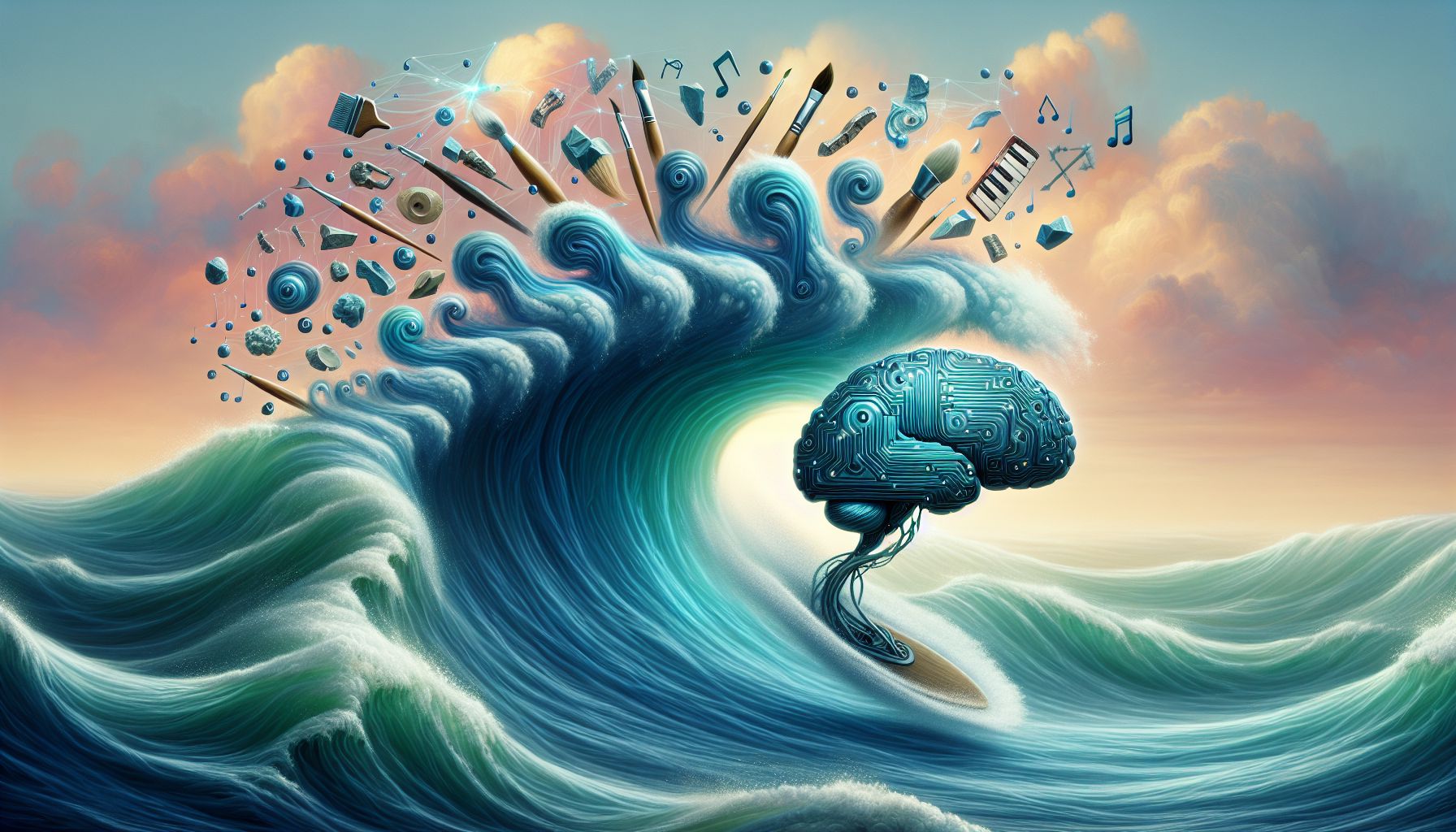
Hey tech enthusiasts, fellow geeks, and curious minds! Today, I’ve got some mind-blowing stuff to share about how Artificial Intelligence is completely changing the world of creative arts. We’re talking about a future that even Da Vinci couldn’t have imagined, or maybe he could, given his imagination knew no bounds. Anyway, let’s jump into this wild intersection of AI and creativity!
The Dawn of Artistic Machines
Remember when AI was just about crunching numbers and making predictions? Well, the bots have officially graduated from nerd school and are now taking on the creative arts. Picture this: computers composing symphonies, painting masterpieces, and even writing best-sellers. It’s like we’ve got a whole new set of digital Picassos and Hemingways.
But how did we get here? It’s partly thanks to advances in machine learning and neural networks, particularly Generative Adversarial Networks (GANs). These algorithms learn from heaps of data and can create new, original works that copy human style. Think of it as the ultimate copycat that doesn’t just imitate but innovates. So instead of coming for your job, AI might just work with you to create the next big trend.
AI-Made Music: The Symphony of Silicon
Now, let’s tune into the world of music. AI algorithms are composing music that rivals some human artists. Imagine AI as the cool backstage producer that knows every genre inside out but doesn’t have the ego. Or does it? Tools like OpenAI’s MuseNet and Google’s Magenta turn out tracks that range from Bach to Bon Jovi with a few clicks.
Recently, I stumbled upon Amper Music, an AI platform that lets you make custom music as easily as ordering a coffee. The creative potential here is insane. Indie filmmakers and podcasters finally have their budget-friendly composer. And before you shrug this off as just elevator music, consider this: some AI-composed tracks are racking up millions of plays on streaming platforms. AI isn’t just creating. It’s creating hits.
The Digital Canvas: AI Meets Visual Arts
Calling all art lovers. AI’s paintbrush is digital, precise, and wonderfully unpredictable. If you’re into abstract art, here’s a jaw-dropper: AI can create visually amazing pieces that challenge traditional human aesthetics. Think mesmerizing artworks that seem like they’ve been pulled from a parallel universe.
Platforms like DeepArt.io and Google’s DeepDream explore this realm by using AI to transform photos into complex artworks. The results range from the sublime to the surreal, depending on how deep you go down the algorithmic rabbit hole. And then there’s DALL-E, also by OpenAI, which generates images from text prompts. Type in “a cat on a skateboarding banana,” and voila, a new meme is born. The fun is endless, and so is the creativity.
Words of Wisdom—or Whimsy: AI in Writing
Time to open a new chapter, literally. AI is dipping its digital quill into storytelling, poetry, and even journalism. AI services like Jasper and Sudowrite help budding authors and content creators break through writer’s block with ease. Meanwhile, GPT-3, another marvel by OpenAI, can generate coherent and creative text that ranges from hilarious to hauntingly beautiful.
Admittedly, the literary community is a bit torn here. Purists balk at the notion of machines muscling into their beloved craft. But consider the possibilities: an AI co-author that helps juggle ideas, plots, and character arcs without losing its cool. Sure, AI may not fully grasp human emotions yet, but it’s quite good at narrative structure, making it a valuable ally in the writer’s toolbox.
Challenges: The Devil’s in the Digital Details
As thrilling as all this sounds, it’s not all smooth sailing into our creative utopia. One glaring challenge is originality. AI might generate seemingly original work, but it heavily relies on existing data. There’s a risk of perpetuating bias or infringing on intellectual property. You know that phrase, “standing on the shoulders of giants”? Well, sometimes AI can trip over those same shoulders.
Moreover, there’s the question of authorship and ownership. If an AI creates a piece of art or writes a novel, who gets the credit? The programmer? The AI itself? While these questions might seem philosophical, they have real-world implications, especially since royalties and recognition are at stake.
A Speculative Look: AI and the Future of Creativity
So where does this leave us? Fast forward a decade or two. AI and humans working hand in hand could redefine what it means to be an artist. We could see the rise of new art forms, genres, and perhaps an entirely new culture co-created with AI.
For instance, imagine walking into a digital art show where paintings transform based on viewer mood, thanks to AI emotion recognition. Or consider AI soundscapes that adapt to the environment and mood in real-time. This partnership has the potential to create dynamic, interactive art experiences that evolve and grow.
Conclusion: Embrace the Renaissance
So, what’s the takeaway from this tech odyssey? AI is not here to replace human creativity but to enhance it. It’s the tool we never knew we needed, amplifying imagination in ways we’re just beginning to understand. As artists, we get to break out of the traditional palette and explore digital realms with endless possibilities.
As we stand at the edge of this new renaissance, I can’t help but feel a tingle of excitement. The future of creativity is colorful, surprising, and yes, brimming with both bits and brushstrokes. So let’s embrace this wave of change. Who knows? Your next favorite song or painting might just have a bit of AI magic in it. Cheers to that!