Are We Ready for AI that Creates Art?

Hey there, fellow tech enthusiasts! Today, I’m diving into a hot topic that’s been all the buzz in the tech community: AI in creative arts. Picture this: a world where artificial intelligence doesn’t just analyze and optimize but creates and inspires. Sounds like an episode of Black Mirror? Maybe, but it’s happening right now. AI isn’t just for geeks in lab coats or sci-fi dreamers anymore. It’s working alongside artists, poets, and musicians. Grab a cup of coffee (or a can of energy drink, your call!) and let’s explore this messy, exciting collision between machine intelligence and human creativity.

AI Takes the Stage

Let’s rewind a bit. Remember just a few years ago when AI mostly meant clunky chatbots and voice assistants that couldn’t understand your accent? Fast forward to today, and we’ve got AI creating art that could hang in a gallery next to a Van Gogh. It’s wild, honestly.

Meet the AIs: Artists of the Digital Era

We can’t talk about AI in creative arts without giving a shoutout to some rockstar AI tools. OpenAI’s DALL-E can spit out images based just on text input. Type “a futuristic cityscape with rainbow giraffes,” and boom, it’s on your screen in seconds. Then there’s DeepArt, which transforms your ordinary selfies into dramatic, impressionist-style masterpieces that look like they belong in a museum.

It’s tempting to dismiss these AIs as fancy gimmicks, but that doesn’t really capture what they’re doing. They’re not just copying existing art. They’re creating something new based on patterns and styles pulled from massive datasets of human-made work. The results can be surprisingly original.

Where AI Art Shines

What gets me excited is how AI approaches creativity from angles humans might never consider. While we’re stuck thinking about artistic conventions and what’s “supposed” to look good, AI just… doesn’t care. Sometimes that indifference produces something genuinely fresh.

Breaking Creative Blocks with Algorithms

One of my favorite examples comes from the music world. Ever heard of AIVA? It’s not a pop star’s stage name but an AI that composes symphonies. Trained on classical music, it now produces film-score-worthy compositions. Composers use AIVA to break through creative blocks, mixing machine-generated ideas with human intuition.

Having AI as a creative partner is like brainstorming with someone who never gets tired and has zero filter. Need inspiration for a graphic novel? AI can generate hundreds of scene ideas until something sparks. It’s collaboration, not replacement.

Beyond the Brushes and Beats

The implications here are huge. Some people are thrilled about this shift. Others are worried, and honestly, I get both reactions. Major technological changes always split people down the middle. Remember how divided everyone was when the internet first showed up?

Who Owns AI Art?

Here’s where things get legally messy. If an algorithm creates a painting, who owns the copyright? The programmer who built it? The person who typed the prompt? Some futurists even suggest AI might need its own legal rights someday. Can you imagine AI Picasso filing for royalties?

Then there’s the deeper question about value. Art has always been special because of its human connection, the emotion between creator and creation. Can AI art carry the same weight? I’m honestly not sure we know yet.

The Ethics Get Complicated

With great power comes great responsibility, and AI art raises some serious questions. How do we prevent AI from amplifying existing biases in art and culture? What happens when AI-generated works flood the market and potentially drown out human artists? We’ve already seen AI pieces win art competitions, causing major controversy in creative communities.

What’s Coming Next

The future of AI in creative arts is completely wide open. We might see AI creating immersive virtual reality art experiences. Maybe it’ll help reconstruct lost ancient music or revive forgotten art forms. The possibilities keep multiplying faster than I can wrap my head around them.

When Everyone Collaborates

What really excites me is the potential for massive cross-disciplinary collaboration. Artists working with developers, musicians teaming up with data scientists, everyone bringing different perspectives to the table. AI could be the bridge that connects creative processes from completely different fields, spawning art forms we can’t even imagine yet.

Wrapping Up the Creative Code

As we bring AI into the creative world, I keep thinking that technology isn’t something that just happens to us. We shape it through how we choose to use it. Whether AI creations end up in museums or on our playlists, they don’t represent the death of traditional art. They might be the birth of something entirely new.

So next time you’re wondering what the next big tech breakthrough will be, consider this: it might not be a faster processor or a smarter phone. It could be a completely new way of making art that we’re only just starting to understand. Here’s to whatever comes next in this weird, wonderful collision of technology and creativity.
The Solarpunk Revolution: How Renewable Energy Tech is Transforming Our Future

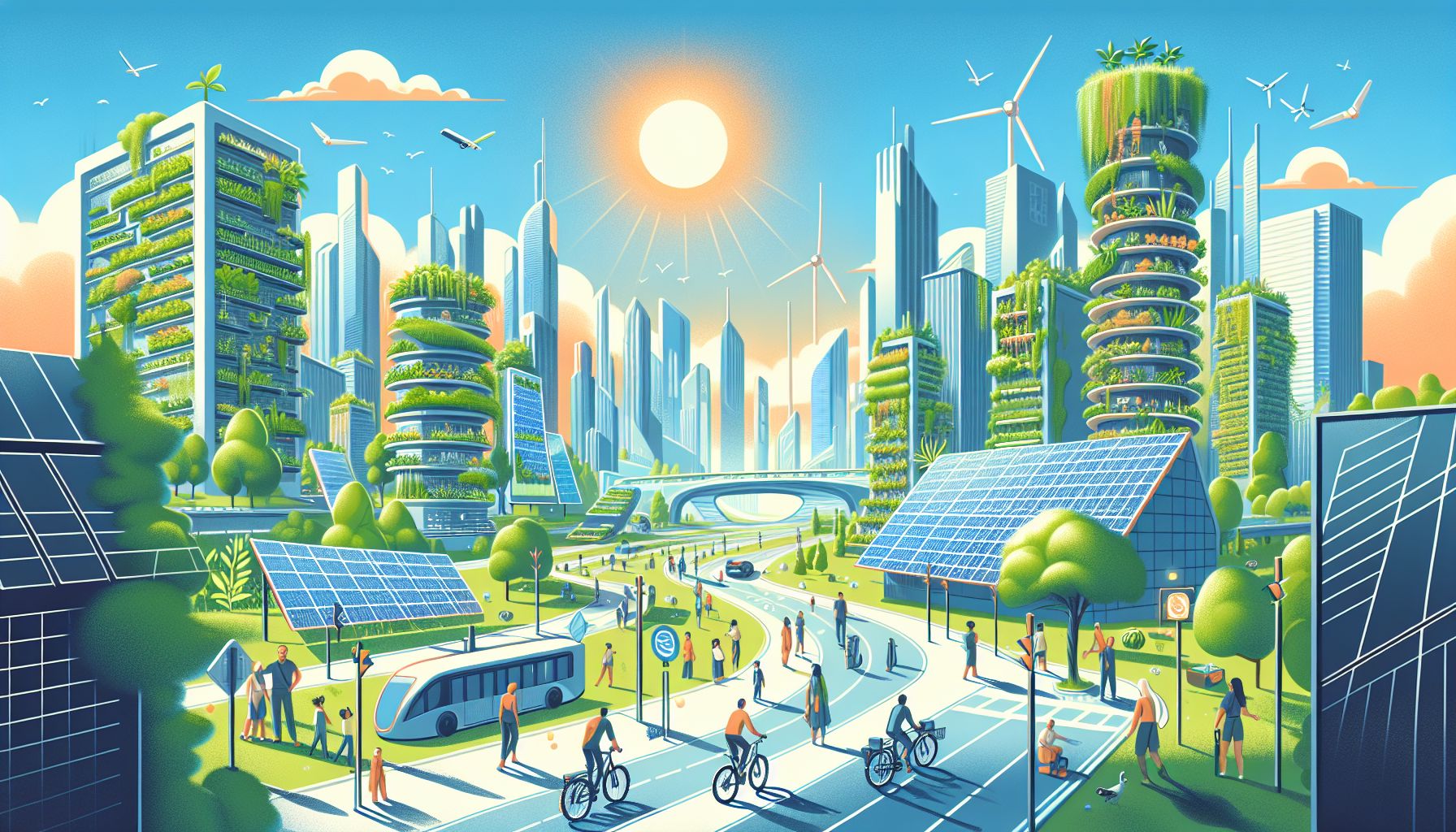
Alright folks, grab your virtual goggles and let’s dive into a world where technology and nature hold hands and skip into a bright future together. Today, we’re exploring solar energy and its buddies in the renewable sector, which are making big moves in transforming how we power our lives. Imagine a future cityscape not too far from today, but one that’s thriving with smart technology, woven into lush greenery, all while the sun fuels our every need. This isn’t just a techno-utopian dream, it’s becoming our reality.

A Power Surge from the Sky

Let’s start with the classic solar panels. Hell, these things have been around since your dad’s first Walkman, right? But the evolution they’ve undergone is nothing short of remarkable. We’ve seen breakthroughs in perovskite solar cells that could outshine the classic silicon, offering higher efficiency at a lower cost. Picture trying to squeeze more juice out of a lemon and then your friend shows up with an orange that produces double the juice. Yep, that’s perovskite for you.

These cells are ultra-efficient, and they can even be printed onto flexible surfaces. Imagine a future where every roof, window, or even your own jacket is busy harvesting energy while you stroll through a sunlit park. Companies and innovators like Oxford PV and Saule Technologies are racing to make this the norm.

The Wind Beneath Our Grids

Let’s not forget our windy pals in the renewable game. Off the coastlines, massive wind turbines are cropping up like futuristic metal tulips. These aren’t the old pinwheels of yesteryear. We’re talking about towering structures with blades as long as football fields. The latest models can power entire towns with ease.

What tickles my tech-loving heart even more is how these behemoths are now being paired with AI-driven energy management systems. These systems predict wind patterns and optimize energy capture, weaving it right into our grids. Companies like Siemens Gamesa are at the forefront, turning guesswork into data-driven precision.

Batteries: Keeping the Juice Flowing

Remember when your old phone would die if you as much as opened Instagram too long? Battery tech has come a long way from those disappointing memories. Today, we’ve got solid-state technologies and energy storage solutions making sure that all that sunshine and wind energy doesn’t go to waste when the sun sets or the breeze dies down.

Tesla’s Powerwall might be the most famous of these home batteries, but let’s not ignore the quiet but robust revolution happening on a larger scale. Grid-scale batteries are now a thing, allowing for flexible storage and use of renewable energy across entire cities. It’s like the energy equivalent of having your cake and eating it too, just without the sugar crash.

The Social Energy Shift

Alright, so technology is clearly leading the charge, but what really turns my gears is the societal shift that’s riding shotgun with it. The decentralization of energy production is giving people agency over their own power needs. Imagine entire communities hopping off the fossil fuel grid, each household contributing to a collective pool of energy freedom. We’re all becoming our own mini power stations while sticking it to the monopoly utilities. Feels good, doesn’t it?

Communities worldwide are letting their green flag fly, combining local resources to set up microgrids that leverage solar, wind, and whatever natural resources are handy. From small villages in Africa to urban centers in Europe, it’s becoming a global movement. Human empowerment through renewable energy.

AI and IoT: The Smart Way Forward

It’s hard to talk about transformation today without giving kudos to Artificial Intelligence and the Internet of Things (IoT). These technologies are the puppet masters behind the scenes, optimizing energy use, predicting demand spikes, and reducing waste.

Smart meters and sensors dot our landscapes, transmitting real-time data to AI systems that say “a-ha, we can save some energy here!” or “let’s store a bit more over there”. This orchestration improves efficiency and slashes costs, giving your wallet a break too.

Challenges and Hurdles: The Reality Check

Before we get too lost in the techno-utopian wonderland, let’s talk about the challenges. The initial investment in this tech doesn’t come cheap and getting political and regulatory support isn’t just a walk in the park, even if it’s a solar-powered one.

We are also facing the not-so-small task of overhauling a century-old infrastructure. It’s like trying to plug USB-C into a floppy drive. It’s going to need some adapting. With enough innovation and policy drive, though, these challenges are manageable.

Looking to the Solar-Horizon

Here’s where I get all dreamy-eyed about the future. With each new technological advance, the potential for a harmonious, eco-conscious society inches closer. Artfully designed cities decked in green splendor. Smart homes learning your power habits. Clean energy buffering the beat of urban life. All possible because we dared to change how we think about energy.

There’s a good chance we’re on the cusp of a truly sustainable era, one where the energy flowing through our circuits and veins doesn’t cost the earth. So, next time you look at the sun, give it a nod of thanks. It might just be the key to our sustainable tomorrow.

In the end, while the road might be long and littered with challenges, I’d bet my highest-wattage light bulb that it’s paved with solar panels and a hell of a lot of optimism. Here’s to a bright future, folks!

Tech-Driven Creativity: Artificial Intelligence and the New Age of Art

You can’t scroll through art news these days without seeing AI pop up somewhere. Whether it’s a computer-generated piece selling for millions at auction or another heated debate about robot creativity, artificial intelligence has definitely crashed the art party. And honestly? I think it’s pretty fascinating how these algorithms are changing what we consider “art” in the first place.

How AI Actually Makes Art

Remember when AI was just something from sci-fi movies? Now it’s creating paintings that hang in galleries. The whole thing works through deep learning models and neural networks that basically gorge themselves on thousands of images, learning patterns, styles, and artistic techniques. Then they use all that knowledge to create something new.

Neural Networks Learn Like Brains (Sort Of)

These neural networks copy how our brains work, making connections between different pieces of visual information so they can “learn” from what they see. Google’s DeepDream was one of the early examples that really caught people’s attention. It takes regular photos and reveals these weird, hidden patterns that create surreal, dreamlike images. The results are often bizarre and captivating at the same time.

But the technology has gotten way more sophisticated since then. Now we have Generative Adversarial Networks, or GANs, which are pretty clever. They use two neural networks that basically compete with each other. One creates images while the other judges them, and through this back-and-forth process, GANs can produce artwork that’s surprisingly good. Sometimes you can’t even tell it wasn’t made by a human.

Artists Get New Digital Tools

For working artists, AI has opened up creative possibilities that didn’t exist before. Picture having an AI assistant that can suggest color palettes, generate entire series of digital paintings, or even help design sculptures, all customized to your style but with its own unique spin. Some digital artists now use algorithms like they’re just another brush in their toolkit.

How AI Changes the Creative Process

AI isn’t just another art supply sitting on the shelf. It’s actually changing how artists approach their work, though not always in the ways people expect.

Working Together Instead of Competing

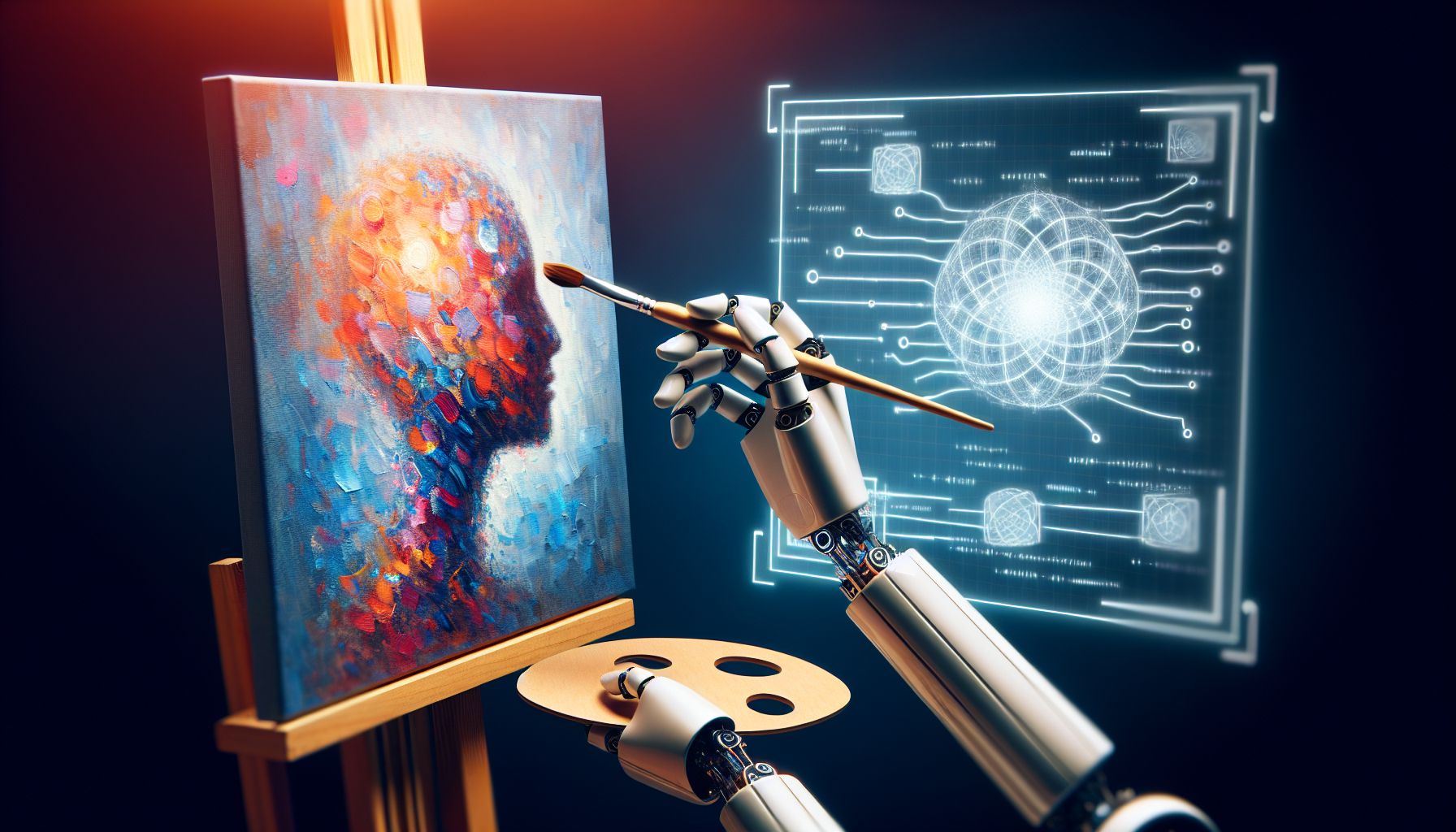
Some really interesting artists are treating AI as a creative partner rather than a threat. Refik Anadol turns massive data sets into these incredible immersive installations that make you think about memory and digital consciousness. Sougwen Chung actually paints alongside robotic arms, creating this intimate human-machine collaboration where you can see both influences in every brushstroke.

Instead of replacing artists, AI often handles the tedious stuff so humans can focus on the big-picture creative decisions. Artists can tackle projects that would have been impossible before because of time constraints or technical limitations.

Making Art More Accessible

Tools like DALL-E, Midjourney, and Runway ML have made it possible for pretty much anyone to create impressive artwork. You type in a description, and the AI generates images, animations, or designs that look professional. It’s wild how easy it’s become.

This accessibility is breaking down traditional barriers in creative fields. You don’t need years of training or expensive equipment anymore. Marketing teams, filmmakers, musicians, and regular people with cool ideas can all create visual content that used to require specialized skills.

The Messy Questions AI Art Raises

Of course, mixing AI with art creates some complicated problems that we’re still trying to figure out. Who actually “owns” a piece of art when an AI helped create it? When a neural network can mimic someone’s style perfectly, what does that mean for originality?

Who Gets Credit?

The whole question of creative ownership gets really murky when AI is involved. Our current copyright laws weren’t designed for collaboration between humans and machines, so there’s a lot of legal gray area that needs sorting out.

There’s also the issue of AI systems learning from existing artworks. Sometimes they might accidentally copy an artist’s signature style too closely, which raises questions about artistic theft. Can a machine truly innovate, or is it just endlessly remixing what it’s seen before?

What Does “Creative” Even Mean?

Maybe the biggest question is whether creativity is uniquely human or something that can be programmed. As AI gets better at making art that moves us emotionally, we’re forced to reconsider what creativity actually is. There’s no universal answer, and different cultures will probably see this differently.

Where We Stand Now

AI is definitely shaking up the art world, and while it’s creating some thorny questions about authorship and authenticity, it’s also opening up amazing new possibilities for creative expression.

We’re living through this shift right now, watching AI evolve from a simple tool into something that feels more like a creative partner. It can’t replace the human soul behind art, but it’s certainly changing how we think about making it.

The AI art revolution isn’t some distant future concept. It’s happening in studios and galleries today, and we’re just getting started.

Embracing the Future: How AI-Driven Creativity is Reshaping Art and Writing

Artificial intelligence isn’t some distant sci-fi fantasy anymore. It’s here, and it’s getting into places we never expected—like art studios and writers’ rooms. I’ve been watching this unfold, and honestly, it’s pretty wild to see machines creating things that used to be purely human territory. Let me walk you through what’s happening when AI meets creativity, and why it’s changing everything about how we think of art and writing.

The Rise of Creativity-Driven Artificial Intelligence

AI used to be all about crunching numbers and following logic. Now? It’s painting pictures and writing poetry. This shift caught a lot of people off guard. Creativity in AI isn’t just about teaching computers to copy what humans do. It’s about discovering what happens when machines start making things we’ve never seen before.

Machine Learning and the Creative Frontier

Can a machine really create something original? That question keeps me up at night sometimes. But machine learning is starting to provide some answers. Neural networks like GPT-3 and GANs (Generative Adversarial Networks) are doing things that feel genuinely creative. GPT-3 can write everything from touching personal stories to technical manuals, and the quality is getting scary good.

GANs work differently—they’re all about visual creativity. Picture this: two AI systems locked in constant competition. One creates images while the other judges how realistic they look. The result? Artwork that rivals what human artists produce. Sometimes I can’t tell the difference, and that’s both exciting and a little unsettling.

Generative Art: Machines as Artists

The Allure of AI-Created Art

Art galleries are starting to feature AI-created pieces, and people are buying them. Tools like DeepArt, DeepDream, and Artbreeder let anyone generate sophisticated artwork through machine learning. You don’t need years of training or natural artistic talent anymore. That democratization is powerful, but it also raises questions about what we value in art.

Art Evolution: From Collaboration to Creation

For centuries, art was purely human. Inspiration, emotion, personal experience—these drove creativity. Now we’re seeing something different. Some artists work with AI as a creative partner, blending algorithmic precision with human intuition. Others step back entirely, letting AI create independently. Both approaches are producing work that challenges everything I thought I knew about creativity.

The Impact on Writing and Literature

From Algorithms to Authors

Natural Language Processing has reached a point where AI can write entire books. Real books that people actually read. This messes with fundamental ideas about authorship and originality. When an AI writes a novel, who’s the author? The programmer? The AI itself? These aren’t just academic questions anymore—they’re affecting real writers and publishers.

Enhancing Creativity through AI

Not all AI writing is about replacement. Many writers use AI tools to brainstorm, beat writer’s block, or polish their drafts. Applications like Sudowrite suggest plot twists or help develop characters. I’ve tried some of these tools myself, and they’re surprisingly helpful. They give you a creative safety net that lets you experiment without fear of failure.

The Economic and Cultural Ramifications

Democratizing Creativity

Here’s what gets me excited: AI is lowering barriers everywhere. You don’t need expensive art supplies or years of training to create something beautiful. Aspiring artists and writers can jump in with AI assistance and start creating immediately. This could lead to an explosion of diverse voices and perspectives in creative fields.

The Conundrum of Authenticity

But there’s a flip side. When anyone can create AI-generated art or writing, what makes something special? What do we mean by “authentic” anymore? These questions don’t have easy answers, and they’re creating heated debates in creative communities.

The Ethical Considerations

Navigating the Moral Compass

Every revolutionary technology brings ethical headaches, and AI creativity is no exception. Copyright law is struggling to keep up. If an AI creates art based on thousands of existing works, who owns the result? Plus, AI systems can inherit biases from their training data, potentially perpetuating inequality in creative spaces. We need to address these issues now, before they become bigger problems.

Conclusion: The Future of Creativity in an AI-Driven World

AI’s move into art and writing feels like a turning point. We’re not just using new tools—we’re redefining what creativity means. Machines aren’t just helping us create anymore; they’re becoming creative partners, and sometimes creative forces in their own right. This raises complex questions about authenticity, ownership, and the nature of art itself. But it also opens up incredible possibilities. More people can participate in creative fields than ever before. We’re seeing new forms of art and literature that couldn’t exist without AI. Yes, there are challenges ahead, and we’ll need thoughtful discussions about ethics and fairness. But I’m genuinely excited about where this is heading. The intersection of human creativity and artificial intelligence isn’t just changing how we make art and write stories—it’s expanding what’s possible.

Exploring Artificial Intelligence: The Turning Point in Human-Computer Interaction

Artificial Intelligence (AI) has changed dramatically over the past decade, working its way into almost every part of our daily lives. The world of human-computer interaction is experiencing major advances, powered by AI capabilities that are genuinely revolutionary. Today, I want to explore how AI is changing the way we interact with machines and why this might be the beginning of something truly special in technology.

The Rise of Conversational AI

One of the most obvious changes in human-computer interaction is how common conversational AI has become. From Siri to Alexa, these AI-powered personal assistants are now part of millions of homes. They work using natural language processing (NLP), which lets computers understand, interpret, and respond to human language in ways that feel smooth and natural. Recent improvements in machine learning and deep learning have dramatically enhanced NLP, creating conversations that often feel surprisingly human-like.

Natural Language Processing: More Than Just Words

What really matters in these interactions is understanding context. Earlier versions just looked for keywords, which led to awkward or completely off-base responses. Today’s NLP algorithms can pick up on the subtleties of human language, including jokes, sarcasm, and emotional undertones. These improvements have made voice-operated systems not only useful but actually intuitive to use, setting the stage for a future where talking to machines feels completely natural.

Personalized and Contextual Interactions

AI is also getting much better at offering personalized and context-aware interactions. These systems look at your environment, preferences, and history to customize responses and suggestions. Whether it’s recommending your next binge-worthy TV show based on what you’ve watched or creating custom workout plans, AI systems are becoming surprisingly good at creating experiences that feel tailored just for you.

Contextual Computing: The Future of Interaction

Contextual computing, which AI makes possible, uses data from sensors and user interactions to predict what you need and provide help in real-time. This technology is being built into everything from augmented reality (AR) to virtual reality (VR) interfaces. Picture a future where your smart devices can read your mood, help with tasks without getting in the way, or automatically adjust to different environments—all powered by AI that actually understands who you are and what you need.

AI-Driven User Experience Design

User experience (UX) design is also being transformed by AI. Designers can now use AI tools to create more responsive, efficient, and human-centered design processes. AI algorithms analyze huge amounts of user interaction data to reveal insights about user behavior, preferences, and frustrations.

Automated UX – A Game Changer

The automation of user research is one of the biggest wins for AI in UX design. In the past, collecting and analyzing usability testing data took forever and required tons of manual work. Now AI can process this data quickly, spotting patterns and trends that human researchers might completely miss. This allows for much more agile, iterative design processes that can adapt to user needs rapidly.

Ethical and Privacy Considerations

While AI brings huge benefits to human-computer interaction, it’s not all smooth sailing. As these systems collect and process enormous amounts of personal data, privacy and data security concerns have become impossible to ignore.

Navigating the Ethical Landscape

Making sure user data is handled ethically and securely is absolutely critical for maintaining trust in AI systems. Developers need to be transparent about how data gets used and give users real control over their information. Getting this balance right between personalization and privacy will determine whether AI technologies successfully integrate into our daily lives or face serious backlash.

Conclusion: A New Era of Interaction

The progress in AI for human-computer interaction shows just how far we’ve traveled from the early days of computing. As conversational AI keeps improving, and as personalization and context-aware technologies become more sophisticated, the line between human and machine interaction will continue to blur. This changing field offers incredible opportunities for innovation while creating new challenges that will need careful handling.

As we move toward this tech-enhanced future, one thing is clear: AI has already changed the way we engage with technology, and it will keep making interactions feel more human. Whether through voice, gestures, or even emotional recognition, AI is creating a world where our digital experiences feel as natural as talking with a friend.

Over the next few years, watch for breakthroughs in AI-driven interaction design. They might just completely redefine how we live, work, and play.

I’d love to hear your thoughts below. Are you excited about talking to your smart devices as if they were real people? What are your biggest hopes and concerns about AI-driven interactions?

The Top Rated Can Openers

If you’re shopping for a new can opener, you’ll want to start by looking at what’s actually worth buying. Why does this matter? Well, you’re picking something that your family will use regularly. You want something that cleans easily, won’t break after a few months, and is safe for everyone to handle.

I think the EZ-duzit is your best bet. It’s cheap and reliable, which is exactly what you want in a can opener. The EZ-duzit has a stainless steel handle and a simple rotating knob. That knob turns smoothly without much effort on your part.

This thing is straightforward to use and clean. Honestly, every household should have one. The EZ-duzit works well for kids and adults alike. Whether you’re dealing with children, seniors, or anyone in between, this can opener does the job.

This is a highly-rated option that works great in the kitchen or anywhere else you need it. It operates easily and gives you a clean, safe way to remove lids from canned foods. Plus, cleanup is a breeze.

The smooth turning knob makes operation effortless, and it comes in different sizes to handle various cans and bottles. The design cleans up nicely, and the handles won’t scratch your refrigerator or stovetop if they bump against them.

If you’re always busy, this can opener fits the bill. It’s simple to use, cleans easily, and won’t break the bank. It has five different speeds and includes a safety locking mechanism so the lid stays secure. The adjustable speed dial makes it simple to control.

The Best can openers are worth considering when you need the right tool for the job. You have plenty of options when choosing a can opener. The easy-clean design helps keep your kitchen sanitary and free from germs. This model also has an automatic shut-off feature to prevent accidental operation.

Whatever your specific needs, these can openers have the features to help you find what works. Whether you need something for your refrigerator area or freezer space, consider the EZ-duzit. It gets great reviews from both regular users and experts.

The EZ-duzit is perfect if you’re watching your budget. When you want an inexpensive can opener that doesn’t compromise on quality or safety for your canned or bottled goods, the easy-clean design of the EZ-duzit makes sense. It’s definitely worth considering when you’re shopping for convenience and family safety.

It’s simple and safe to use. You get all the features you need with that easy-clean design that helps keep your kitchen free of germs and bacteria. The EZ-duzit is made from high-quality plastic that’s durable and safe for food and beverages. It’s dishwasher safe and has five speed settings so you can find the right setting for your needs.

If you want a top-rated can opener, the easy-clean feature makes maintenance simple and safe. You also get that automatic shut-off feature to keep your food and beverages protected during storage. The durable plastic construction means it’ll last longer. That convenient automatic shut-off keeps your food and drinks fresh until you’re ready for them.

When you need a reliable can opener to enjoy your food and beverages with confidence, the EZ-duzit is worth serious consideration. This highly-rated opener also gives you great cleaning convenience and comes in various sizes to fit different cans and bottles. The simple operation and five speeds make it easy to handle.

What is the Best Secured Credit Card?

If you’re rebuilding your credit or starting from scratch, you’ve probably asked yourself what is the best secured credit card. I get it – you want the benefits of having a credit card without watching your debt spiral out of control and potentially losing the card altogether. The good news is there are two main types of secured cards that can help you out.

what is the best secured credit card

The first type comes directly from banks. Think of these as extensions of your regular banking relationship – they work through your checking or savings account. Here’s how it works: you put down a security deposit that becomes your credit limit, and the bank holds onto that money while you use the card. You’ll typically pay a small account maintenance fee, but that’s usually pretty reasonable.

The second option comes from credit card companies themselves. These companies will also require a deposit, but they handle the whole process independently rather than tying it to your existing bank accounts.

Before you can figure out which secured card is right for you, you need to know where you stand credit-wise. Pull your free credit reports from all three major bureaus (you’re entitled to one every twelve months by law). Look for proof that you can make payments on time and aren’t racking up late fees. This history will help determine which cards you’ll qualify for.

Some companies partner with banks to offer their own secured card programs. These hybrid accounts often work differently than straight bank-issued cards, so it’s worth comparing your options.

When you’re shopping around, start your search online. Many companies offer secured cards with no monthly fees and no annual fees, which means you can keep the card longer without worrying about extra costs eating into your available credit.

Here’s my advice for actually using your secured card: pay off your balance within three to six months if possible. This approach helps you pay down what you owe faster and keeps your utilization low, which looks good to credit bureaus.

The right secured card can genuinely help you reduce existing balances and build better credit habits, especially if you’re committed to paying things off quickly.

Do your homework before choosing a company. You want to work with a secured credit card issuer that actually helps people improve their credit, not one that’s just looking to collect fees. Look for companies with solid reputations and transparent terms.

Your best bet is finding a company that works well with your current bank or has good relationships with major financial institutions. This can make the whole process smoother and sometimes gets you better terms.

One mistake I see people make is choosing a secured card with a really high credit limit. Sure, it sounds appealing, but higher limits often come with higher fees and more temptation to overspend.

The problem with going for a high limit is simple: it makes the card harder to pay off completely. That costs you money in interest and can actually hurt your credit if you end up carrying a balance month after month.

When you’re looking for the best secured credit card, focus on finding one with a reasonable interest rate that you can realistically pay off quickly. A good secured card should also offer the chance to lower your interest rate over time as you prove you’re a responsible borrower.