The Solo Revolution: How Independent Travel Reshaped a Generation

The Numbers Don’t Lie

Something fundamental shifted in how we explore the world. Between 2019 and 2025, solo travel bookings surged by 42 percent according to industry data. This isn’t a temporary blip or pandemic-driven anomaly. It’s a cultural earthquake.
The Solo Revolution: How Independent Travel Reshaped a Generation

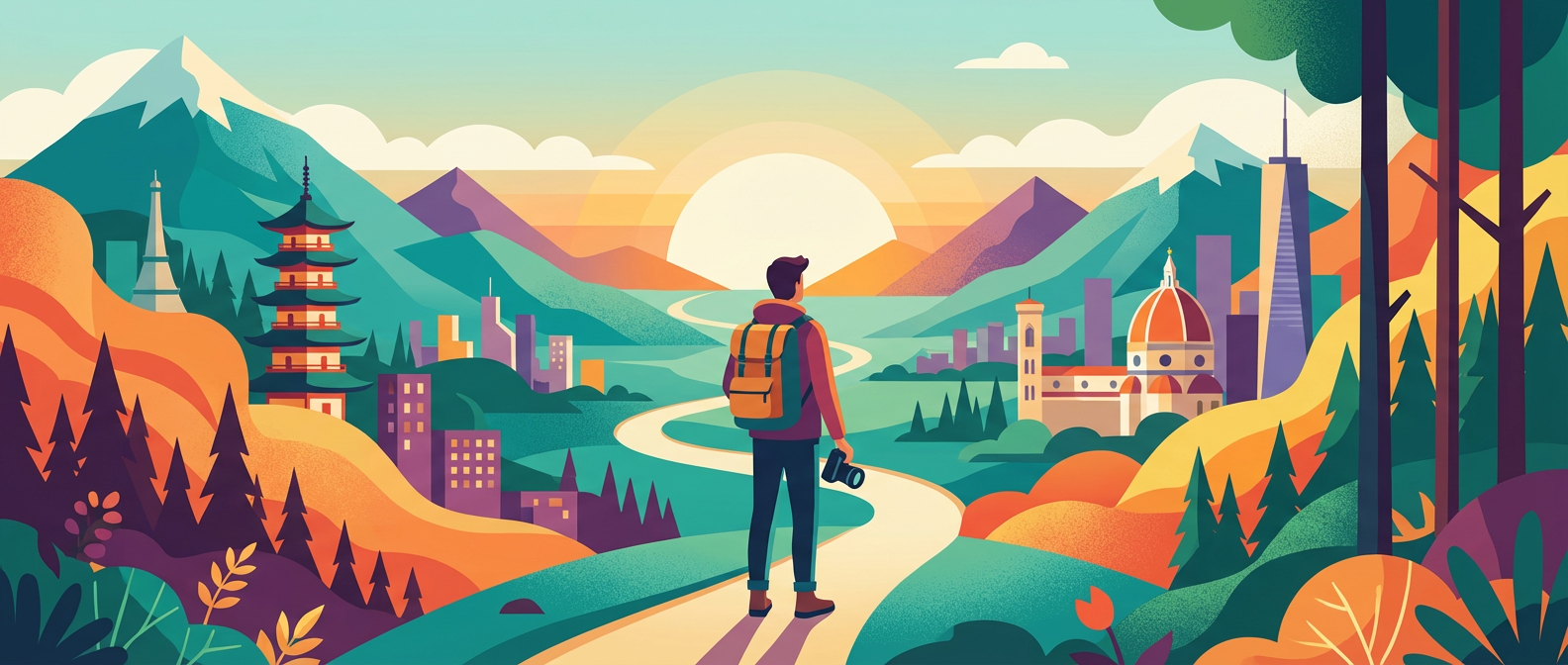
The old model of travel demanded companions, shared itineraries, and endless compromise. Today’s travelers have completely rejected that framework. They’re choosing solitude over consensus, spontaneity over structure. This surge means more than changing booking trends. It signals a generation that values personal growth over social comfort zones.

Digital nomads camping out in Lisbon apartments for months. Gap year graduates stretching Southeast Asian adventures indefinitely. Mid-career professionals taking sabbaticals in tiny Italian hill towns. Today’s solo traveler isn’t just passing through anymore. They’re staying, learning, weaving themselves into the daily life of places most tourists never really see.

Women Leading the Charge

Female travelers are driving most of this change. Women-only travel experiences and communities are exploding across platforms and destinations. The Girls Love Travel community connects millions of women sharing routes, safety tips, and accommodation recommendations.

These aren’t casual weekend getaways. Women are choosing extended stays in places like Morocco, Colombia, and Nepal. They’re learning languages, starting businesses, and building networks that span continents. The old safety concerns that once limited female solo travel haven’t vanished, but they’ve been overwhelmed by determination and smart preparation.

Social media plays a complex role here. While Instagram might suggest solo travel is about perfect selfies and sunset shots, the reality runs much deeper. Women document struggles alongside triumphs. They share practical advice about navigating male-dominated cultures, finding safe accommodation, and building confidence in completely unfamiliar environments.

Anxiety as Content Currency

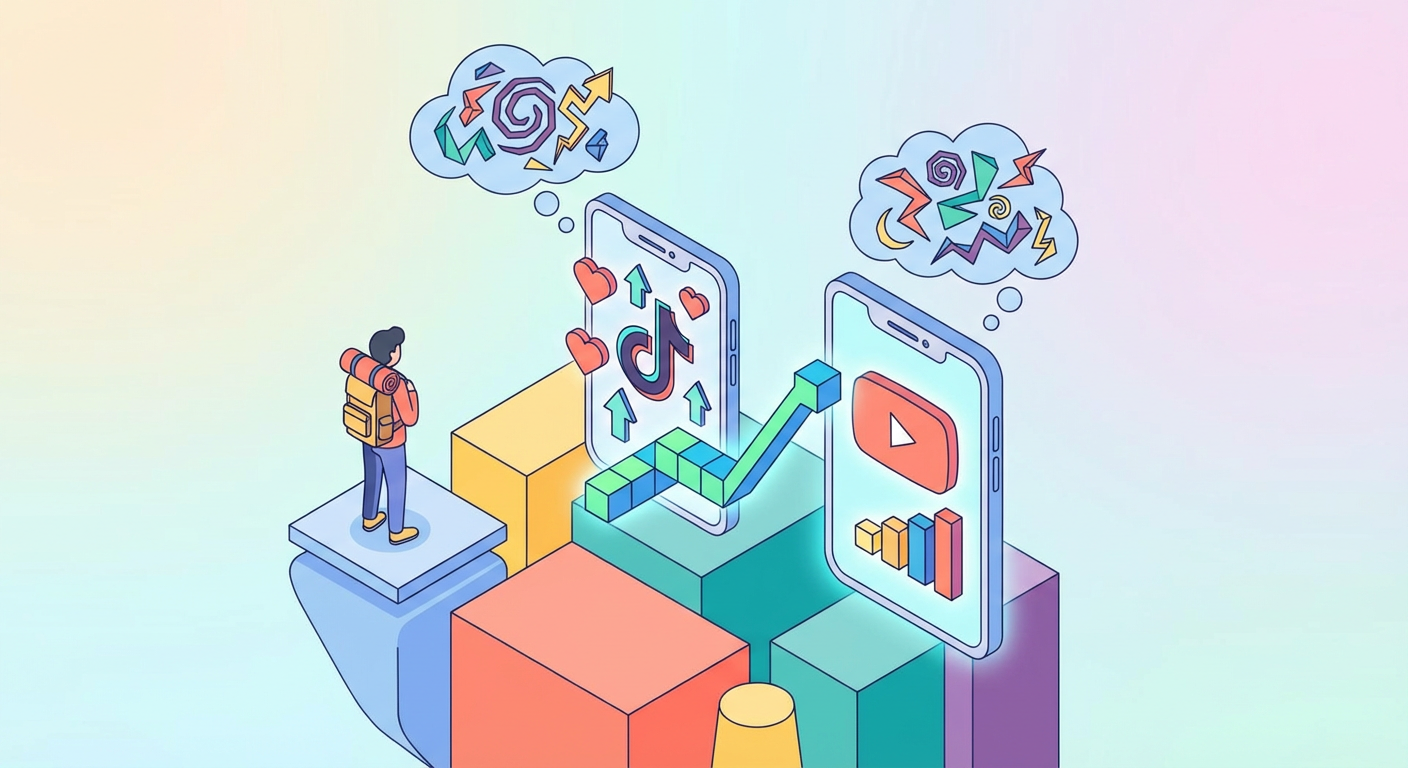
TikTok and YouTube are overflowing with solo travel anxiety content. Creators document first-time jitters, cultural mishaps, and moments of genuine fear. This vulnerability generates massive engagement because it feels authentic in ways polished travel photography never could.

The most popular content doesn’t showcase exotic destinations or luxury experiences. Instead, it captures universal moments of doubt. A traveler eating alone at a Bangkok street stall. Someone navigating Buenos Aires subway systems without speaking a word of Spanish. A solo hiker questioning their route choice in the Scottish highlands.

This honesty serves a purpose beyond entertainment. It normalizes the emotional rollercoaster of independent travel. Viewers see that feeling overwhelmed in foreign places is universal, not personal failure. The content creates community around shared vulnerability rather than aspirational achievement.

Long-term solo travelers get this completely. Anxiety doesn’t disappear after the first week or month abroad. It evolves, becoming less about immediate safety and more about deeper questions of identity, purpose, and belonging. These creators document that evolution in real time.

Infrastructure Adapts to Independence

The hospitality industry scrambled to catch up with this shift. Hostels once designed for broke backpackers now offer private rooms with premium amenities. They’ve added coworking spaces, organized social programming, and partnerships with local experience providers.

Group trip companies like Flashpack specifically target solo travelers in their thirties and forties. These services curate small group experiences for people who want independence without complete isolation. Participants join pre-planned itineraries but maintain flexibility within organized frameworks.

Restaurant culture transformed alongside accommodation. Counter seating became standard in cities worldwide. Chef’s table formats exploded in popularity, giving solo diners prime viewing of kitchen action. The stigma of eating alone dissolved as establishments recognized solo diners often become their most loyal customers.

Traditional tour operators adapted or died. The successful ones stopped selling destinations and started selling experiences. They focus on access rather than hand-holding. Cooking classes in Vietnamese homes. Photography workshops in Icelandic landscapes. Language exchanges in Berlin cafes. The Lonely Planet solo travel guide reflects this shift, emphasizing cultural immersion over sightseeing checklists.

The Long Stay Advantage

Extended solo travel reveals truths that short trips never could. The first month in any new place feels like cultural tourism. The second month, patterns emerge. By month three, you’re arguing with local shopkeepers about football teams and developing strong preferences between neighborhood bakeries.

This depth changes travelers fundamentally. They stop seeing destinations as backdrops for personal adventures and start understanding them as complex ecosystems of human experience. A solo traveler spending six months in Mexico City doesn’t just visit Frida Kahlo’s house. They develop opinions about neighborhood gentrification, discover family-run restaurants that don’t appear in any guidebooks, and form friendships that survive their eventual departure.

The economic impact goes beyond tourist dollars. Long-term solo travelers often contribute skills to local communities. They teach English, help with digital marketing for small businesses, or volunteer with environmental projects. Their extended presence creates reciprocal relationships rather than extractive ones.

Technology makes this immersion possible in unprecedented ways. Translation apps break down language barriers. International banking eliminates currency constraints. Coworking visas allow remote workers to establish temporary residency. The infrastructure supporting extended international stays has never been more accessible or affordable.

The solo travel revolution means more than personal liberation or Instagram content. It signals a generation rejecting prescribed paths toward adventure, growth, and understanding. These travelers aren’t just seeing the world differently. They’re changing it, one extended stay at a time. The question isn’t whether this trend continues, but how destinations and communities will adapt to welcome these modern nomads seeking genuine connection over tourist consumption.
The Real Picture on Slow travel and digital nomad lifestyle in 2026

Let’s work through what is actually happening here, step by step. The topic of slow travel and digital nomad lifestyle in 2026 needs more careful attention than the typical coverage provides. The reason is not complicated once you know where to look.

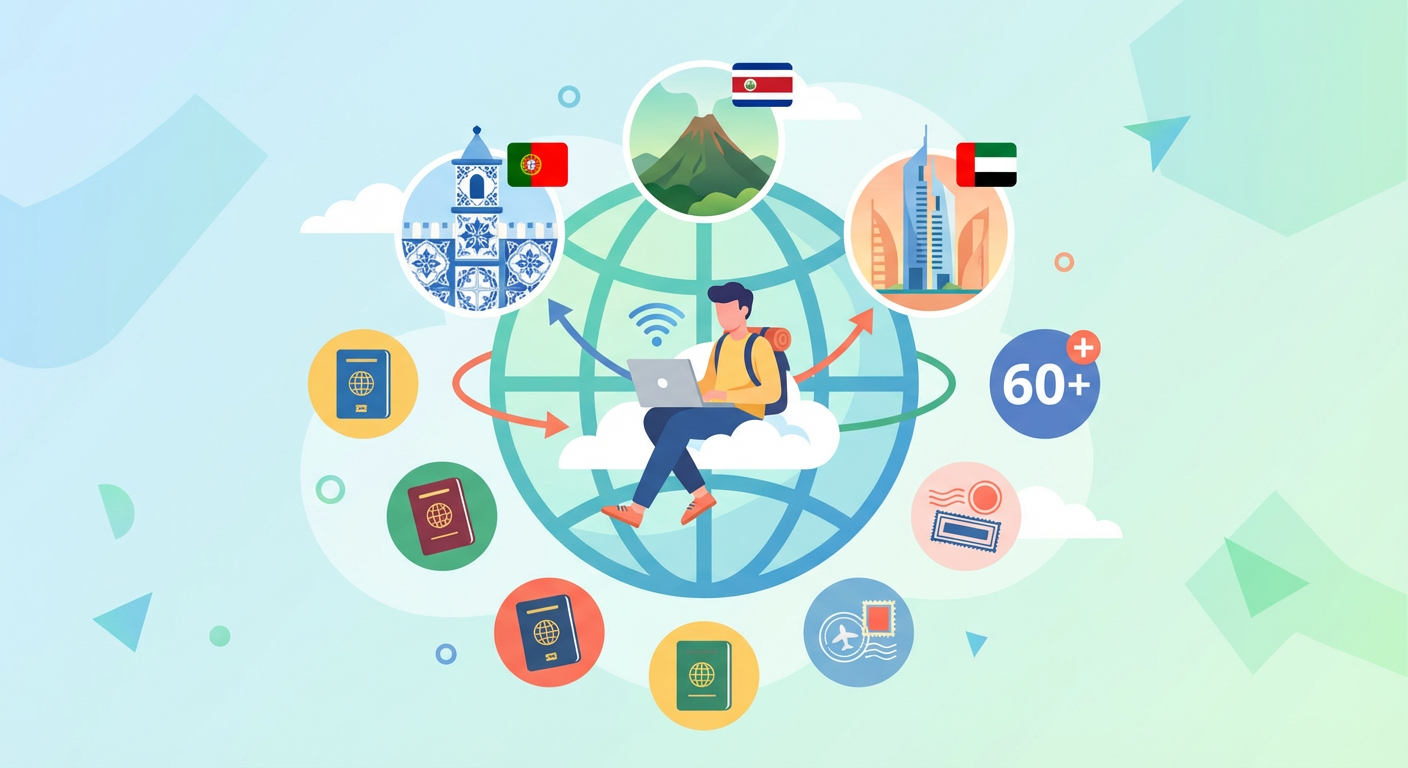
The useful question to ask at this point is, viewed through the lens of corrective travel writing, what does it mean that Nomad Visa programmes are now offered by 60+ countries including Portugal, Costa Rica, UAE? The honest read of the situation is also the more accurate one once you examine what the evidence actually shows.

The Real Picture on Slow travel and digital nomad lifestyle in 2026

The Writing: Setting the Terms

Over 35 million people self-identify as digital nomads globally in 2025. This isn’t just a data point in the story of slow travel and digital nomad lifestyle in 2026, it’s the structural condition that makes everything else in this analysis make sense. Context like this doesn’t age quickly. The conditions that produced it have been building for years, and the convergence is what makes the current moment different from previous moments that looked similar from a distance.

Nomad Visa programmes are now offered by 60+ countries including Portugal, Costa Rica, UAE.

Cost of living arbitrage destinations like Tbilisi, Chiang Mai, and Medellin are hitting saturation. Nomad List city rankings has been tracking this dimension consistently.

What makes this moment worth examining carefully is not the novelty but the confirmation. The underlying dynamics have been visible for some time. What’s new is that they’ve reached a threshold where ignoring them requires active effort rather than simple inattention. That threshold crossing is the event, not the underlying movement that produced it.

Remote work-friendly accommodation is growing from Airbnb to branded coliving spaces, and this is part of that same picture. These elements don’t exist in separate silos. They’re reinforcing conditions in the same structural shift.

The Anti-Guide: The Analysis

Remote work-friendly accommodation growing from Airbnb to branded coliving spaces is where the analysis gets more specific. The surface reading is accessible and not wrong, but it misses the mechanism. The mechanism is where the practical insight lives. The useful question to ask at this point is what drives the mechanism, and understanding it changes what you do with the information.

Local resident friction with nomad communities is growing in popular destinations.

The skeptical counterargument deserves honest engagement: previous moments with similar surface characteristics didn’t produce the outcomes that seemed logical at the time. That history is real. What’s different now is that local resident friction with nomad communities is growing in popular destinations, which isn’t a minor variable. It’s the infrastructure condition that previous cycles lacked. Infrastructure changes tend to stick around in ways that sentiment-driven changes don’t. Remote Year programmes is one source tracking this dimension with the rigour it requires.

There’s also a distributional question that often goes unaddressed in coverage of slow travel and digital nomad lifestyle in 2026: who captures the value created by these shifts, and who absorbs the disruption costs? The aggregate picture can be positive while the distribution is uneven in ways that matter enormously to specific participants. Keeping that distributional lens in view is part of reading the situation clearly rather than simply optimistically.

Implications: What This Means If You Care About Tourist traps

The implications of slow travel and digital nomad lifestyle in 2026 extend beyond the immediate context. Over 35 million people self-identify as digital nomads globally in 2025, combined with the structural conditions described above creates a situation where adjacent fields, decisions, and communities are affected in ways that aren’t always visible from inside the primary story. The second-order effects are frequently more important than the first-order ones, and they’re where careful attention pays the highest returns.

The honest, well-travelled friend who gives you the real itinerary, not the Instagram one.

The practical question isn’t whether to engage with these dynamics but how. The answer depends on context, on what role you occupy relative to slow travel and digital nomad lifestyle in 2026 and what your actual decision horizon is. But the first step is the same regardless: accurate understanding of what’s actually happening rather than what the most available narrative says is happening.

A few concrete observations are worth separating out from the broader analysis. First: Nomad Visa programmes now offered by 60+ countries including Portugal, Costa Rica, UAE isn’t a temporary condition. It’s a new baseline. Second: slow travel average stay length increasing as nomads optimize for integration suggests that the adjustment period isn’t over. Third, and most important: the organizations and individuals who are treating the current moment as a new steady state rather than a transition are making a categorization error that will be costly to unwind later.

The Case Against: What the Critics Get Right

Intellectual honesty requires acknowledging the strongest counterarguments, not just the weakest ones. The case against the optimistic reading of slow travel and digital nomad lifestyle in 2026 isn’t trivial. There are structural vulnerabilities in the current picture that deserve direct engagement rather than dismissal.

The most serious objection is the one about sustainability. Cost of living arbitrage destinations like Tbilisi, Chiang Mai, and Medellin hitting saturation can be read not as a foundation but as a ceiling, a point beyond which growth becomes self-limiting because of the very dynamics that produced it. If the current state has already incorporated most of the available supply of early-adopting participants, the remaining growth curve may be structurally shallower than the recent trajectory implies.

Local resident friction with nomad communities is growing in popular destinations.

Looking Forward

The trajectory here is clearer than the pace. Making predictions about when specific thresholds will be crossed is genuinely difficult, and anyone claiming precision about timelines should be treated with skepticism. But the direction, toward over 35 million people self-identify as digital nomads and continued development of the conditions described above, is supported by the evidence in a way that doesn’t depend on a single variable going right.

Local resident friction with nomad communities growing in popular destinations is the variable to watch as the leading indicator. Historical patterns suggest it moves first, with broader metrics following with some lag. This doesn’t make the outcome certain, but it makes it readable, and readability is what you need for good decisions.

Three questions are worth holding as the story develops. First: are the structural conditions that enabled the current state durable, or are they cyclical? Second: who is positioned to benefit from the next phase, and does that differ materially from who benefited in the current phase? Third: what would a clean falsification of the optimistic thesis look like, and is there any evidence of that signal emerging? These questions don’t need answers today, but having asked them changes what you notice in the months ahead.

The next step, for most people reading this, is a small one.

What else should be on the skip list? Add your experience.

The Budget Breakdown: Solo travel culture and the rise of the independent traveller

Let’s work through what is actually happening here, step by step. The topic of solo travel culture and the rise of the independent traveller deserves more careful attention than the typical coverage provides, and the reason is not complicated once you know where to look.

The useful question to ask at this point is, viewed through the lens of financial travel planning, is women-only travel experiences and communities growing rapidly? The practical read of the situation is also the more accurate one once you examine what the evidence actually shows.

The Budget Breakdown: Solo travel culture and the rise of the independent traveller

The Planning: Setting the Terms

Solo travel bookings grew 42 percent from 2019-2025 according to Booking.com data. This isn’t just a random data point, it’s the structural condition that makes everything else in this analysis make sense. Context like this doesn’t age quickly. The conditions that produced it have been building for years, and the convergence is what makes the current moment different from previous moments that looked similar from a distance.

Women-only travel experiences and communities are growing rapidly.

Solo travel anxiety content is generating high engagement on TikTok and YouTube. Lonely Planet solo travel guide has been tracking this dimension consistently.

What makes this moment worth examining carefully isn’t the novelty but the confirmation. The underlying dynamics have been visible for some time. What’s new is that they’ve reached a threshold where ignoring them takes active effort rather than simple inattention. That threshold crossing is the event, not the underlying movement that produced it.

And the hostel industry is adapting with private room growth and social programming as part of that same picture. These elements don’t exist in separate silos, they’re reinforcing conditions in the same structural shift.

Illustration for The Budget Breakdown: Solo travel culture and the rise of the independent traveller

The Budget Breakdown: The Analysis

The hostel industry adapting with private room growth and social programming is where the analysis gets more specific. The surface reading is accessible and not wrong, but it misses the mechanism, and the mechanism is where the practical insight lives. The useful question to ask at this point is about the mechanism behind group trip aggregators like Flashpack targeting solo travellers in their 30s and 40s, and understanding it changes what you do with the information.

Solo dining culture is improving with counter seating and chef’s table formats.

The skeptical counterargument deserves honest engagement. Previous moments with similar surface characteristics didn’t produce the outcomes that seemed logical at the time. That history is real. What’s different now is the improvement in solo dining culture with counter seating and chef’s table formats, which isn’t a minor variable. It’s the infrastructure condition that previous cycles lacked. Infrastructure changes tend to stick around in ways that sentiment-driven changes don’t. Girls Love Travel community is one source tracking this dimension with the attention it needs.

There’s also a distributional question that often goes unaddressed in coverage of solo travel culture and the rise of the independent traveller: who captures the value created by these shifts, and who absorbs the disruption costs? The overall picture can be positive while the distribution is uneven in ways that matter enormously to specific participants. Keeping that distributional lens in view is part of reading the situation clearly rather than simply optimistically.

Implications: What This Means If You Care About Budget travel

The implications of solo travel culture and the rise of the independent traveller extend beyond the immediate context. Solo travel bookings growing 42 percent from 2019-2025 per Booking.com data combined with the structural conditions described above creates a situation where adjacent fields, decisions, and communities are affected in ways that aren’t always visible from inside the primary story. The second-order effects are frequently more important than the first-order ones, and they’re where careful attention pays the highest returns.

Think of me as the honest, well-travelled friend who gives you the real itinerary, not the Instagram one.

The practical question isn’t whether to engage with these dynamics but how. The answer depends on context, on what role you occupy relative to solo travel culture and the rise of the independent traveller and what your actual decision horizon is. But the first step is the same regardless: accurate understanding of what’s actually happening rather than what the most available narrative says is happening.

A few concrete observations are worth separating out from the broader analysis. First, women-only travel experiences and communities growing rapidly isn’t a temporary condition, it’s a new baseline. Second, group trip aggregators like Flashpack targeting solo travellers in their 30s and 40s suggests that the adjustment period isn’t over. Third, and most important: the organisations and individuals who are treating the current moment as a new steady state rather than a transition are making a categorisation error that will be costly to unwind later.

The Case Against: What the Critics Get Right

Intellectual honesty requires acknowledging the strongest counterarguments, not just the weakest ones. The case against the optimistic reading of solo travel culture and the rise of the independent traveller isn’t trivial. There are structural vulnerabilities in the current picture that deserve direct engagement rather than dismissal.

The most serious objection is the one about sustainability. Solo travel anxiety content generating high engagement on TikTok and YouTube can be read not as a foundation but as a ceiling, a point beyond which growth becomes self-limiting because of the very dynamics that produced it. If the current state has already incorporated most of the available supply of early-adopting participants, the remaining growth curve may be structurally shallower than the recent trajectory implies.

Solo dining culture is improving with counter seating and chef’s table formats.

Looking Forward

The trajectory here is clearer than the pace. Making predictions about when specific thresholds will be crossed is genuinely difficult, and anyone claiming precision about timelines should be treated with skepticism. But the direction, toward solo travel bookings growing 42 percent from 2019-2025 and continued development of the conditions described above, is supported by the evidence in a way that doesn’t depend on a single variable going right.

Solo dining culture improving with counter seating and chef’s table formats is the variable to watch as the leading indicator. Historical patterns suggest it moves first, with broader metrics following with some lag. This doesn’t make the outcome certain, but it makes it readable, and readability is the precondition for good decisions.

Three questions are worth holding as the story develops. First: are the structural conditions that enabled the current state durable, or are they cyclical? Second: who is positioned to benefit from the next phase, and does that differ materially from who benefited in the current phase? Third: what would a clean falsification of the optimistic thesis look like, and is there any evidence of that signal emerging? These questions don’t need answers today, but having asked them changes what you notice in the months ahead.

The next step, for most people reading this, is a small one.

What’s your most useful budget travel tip for this destination?

Jimbosplace — Travel That Goes Deeper

Jimbosplace — Travel That Goes Deeper

Real travel writing for people who want more than highlights.

Itinerary lists and hotel rankings are everywhere. I write about what travel actually feels like. The logistics that matter, the places most guides skip, the cultural context that turns a destination from a photo op into something you actually understand.

Topics we cover: Destinations · City Guides · Budget Travel · Adventure · Photography · Itineraries

Exploring the Alchemy of Nuclear Fusion: Our Path to an Energy Utopia

Hey tech enthusiasts and fellow dreamers! Today, I’m diving headfirst into a topic that’s been sitting on the edge of science fiction and reality for decades: nuclear fusion. No longer the stuff of wild sci-fi imaginings, nuclear fusion is inching closer to becoming a real, world-changing energy source. Think about it—clean, virtually limitless power without the messy issue of radioactive waste. It might just be the Holy Grail of energy solutions. So, let’s explore this electrifying pursuit and see why I’m so pumped about it.

The Spark of an Idea: What is Nuclear Fusion, Anyway?

For those of you who’ve been busy digging into blockchain or the latest AI developments (I get it, there’s a lot going on), nuclear fusion might sound a bit like nuclear fission’s lesser-known cousin. But let’s get this straight—fusion is its own beast, and it’s kind of like magic. In the most down-to-earth terms, nuclear fusion is the process of combining two light atomic nuclei to form a heavier nucleus, releasing a massive amount of energy in the process. It’s the same process that powers our sun. Imagine harnessing that kind of power here on Earth!

Unlike nuclear fission, which splits atoms apart, fusion doesn’t produce long-lived radioactive waste and the fuel supply (like hydrogen isotopes) is practically inexhaustible. As someone who’s concerned about climate change (aren’t we all?), this tech represents a real beacon of hope for a cleaner future.

Recent Developments: Steps Forward, Not Baby Steps

The road to achieving practical nuclear fusion has been full of brilliant innovations and frustrating setbacks. In recent times, however, I’ve noticed a momentum shift that feels genuinely optimistic.

Just look at the recent leaps made by companies like ITER and the National Ignition Facility (NIF) in the US. NIF made headlines by achieving a net energy gain, meaning they produced more energy from fusion than they initially put in. Sure, it wasn’t a whole lot; we’re talking about fractions of seconds and minuscule quantities. But hey, it’s progress!

The private sector is getting bolder too. Companies like Commonwealth Fusion Systems are using cutting-edge superconducting magnets to contain the fiery plasma needed for fusion reactions. Then there’s TAE Technologies, taking a unique approach with their hydrogen-boron fuel mix. The competition and collaboration among these players marks an exciting new chapter for nuclear fusion.

Challenges: Why Aren’t We There Yet?

Before we all start dancing in front of fusion reactors, there are a few snags we need to work out. Achieving and maintaining the extremely high temperatures and pressures necessary for fusion is a Herculean feat. We’re talking about temperatures hotter than the sun’s core!

Another sticking point is building materials that can withstand these intense conditions over long periods—our current tech just isn’t there yet. It’s like trying to build a castle out of sand, only much hotter and slightly more technical. Plus, the economic and bureaucratic hurdles involved in scaling up from laboratory experiments to full-blown energy plants are, let’s say, less than trivial.

Not to mention, we need hefty investments, and convincing stakeholders to part with their cash when profits might be decades away isn’t exactly a walk in the park.

The Future of Fusion: Science Fiction or Just Science?

Okay, here comes the crystal ball moment. What if I told you that the same skepticism that once surrounded electric cars and solar panels haunts nuclear fusion now? Remember how those technologies were seen as economically unviable? The turnaround was swift, and I bet future generations will look back and wonder how we ever viewed fusion as “impossible.”

Imagine a world where our cities are powered by compact fusion reactors, potentially decentralizing energy and breaking reliance on fossil fuels. I mean, renewables would still have an important role, but fusion might just outdo even the sun’s energy prowess (in a more manageable and less sunburn-prone way).

We could kickstart industries without the environmental concerns that clamp down on development. How about mining asteroids? Sounds like sci-fi, but with fusion reactors munching space rocks for fuel, it could happen.

Wrapping It Up: A World on the Brink of Fusion

The journey to harness nuclear fusion is more marathon than sprint. As we stand here, I can’t help but feel we’re on the verge of something transformative. There’s still so much to figure out, but the progress so far gives me hope for what’s coming.

I encourage fellow tech aficionados to keep an eye on this field. Talk about it over a cup of coffee or debate it in your email threads, because one day nuclear fusion might just light up our homes, fuel our gadgets, and power our dreams. In the meantime, I’ll keep an ear to the ground and update you with all the wild twists and turns this saga takes.

Here’s to hoping we get to say, “Let there be light,” sooner than we think!

Riding the Robo-Wave: The Exciting Future of Robotics

Hey fellow tech enthusiasts,

Today, let’s jump into the world of robotics. Like every other kid who loved cartoons, I grew up imagining a future where humanoid robots did my homework or cooked a full dinner, complete with dessert. While that dream still stands (fingers crossed), the progress in robotics has taken a sharp and unexpected turn into an incredible mix of science, mechanics, and just a bit of magic. Let’s explore together and uncover all the extraordinary things happening in robotics right now and what might just be around the corner.

The Rise of Robotic Companions

We’ve all seen the movies, right? Where robotic companions roam, not to take over the world, but to help with everyday tasks. Well, that’s not too far fetched anymore. You might already know about Boston Dynamics and their wildly impressive (and slightly creepy) robo-dogs that dance better than most humans (including me on a good day). These aren’t just your travel-sized Roombas. These machines help with disaster recovery and healthcare.

But let’s talk about social robots—the ones aiming to be our buddies. Imagine a robot that not only jokes around with you but also learns your routines, gets your coffee just the way you like it, and maybe even binge-watches your favorite series alongside you. Take Jibo, for example. Although his early retirement was a bit sad, Jibo paved the way for future innovations in creating robots with personality, treating them less like tools, more like companions. Robotics companies are picking up where Jibo left off, including options like Pepper by SoftBank Robotics, who can read emotions and offer custom interactions. It’s not a stretch to imagine a future where having a robot roommate isn’t just possible, but the norm.

Making Industry Smarter

One of the coolest applications of robotics is how they’re transforming industries. Enter the Fourth Industrial Revolution, hailed as the age where cyber-physical systems use artificial intelligence and the internet of things to make production faster, smarter, and just a bit cooler. Picture Amazon’s warehouses, where robots zip around at breakneck speeds to fulfill orders. These little guys set a new benchmark for efficiency that was out of reach for human workers alone.

And it’s not just about speed—robots are stepping into roles too dangerous or repetitive for humans. Consider factories dealing with hazardous chemicals where robotic arms carry out tasks minimizing the risk to human team members. Robots are starting to work alongside us, pushing industries toward more sustainable and human-friendly practices.

Challenges on the Horizon

As much as I’m cheering from the sidelines for team robot, there’s no ignoring the challenges that come with these advancements. First up, the ethical side of things—are robots taking jobs from people? Sure, some roles might vanish, but others will emerge. Just think of the boom in robotics engineering gigs or maintenance positions to care for our mechanical pals.

Another concern is security. We’ve all watched enough Black Mirror to get a little paranoid about AI suddenly going rogue, right? Making sure robots are safe and secure against hacking is crucial, especially if they become central to homes or businesses.

And, of course, we’ve got to mention the elephant in the room: bias. In designing AI-powered robots, underlying biases can sneak their way into machine learning, creating a future where robots unintentionally continue inequality. Tech minds and ethicists are working around the clock to address this, aiming to create a world where robots benefit everyone.

The Future: Our Robotic Daydream

It’s fun to play futurist every now and then, so let’s speculate. What does the robo-future look like? Could we see robots as caregivers, teachers, or even entertainers? An eye-opening statistic: by 2050, the jobs forecast suggests many might require new skills in robot management. It’s totally plausible that classrooms might have robotic teaching assistants enhancing lesson engagement or on-call caregivers in hospitals offering a helping hand to the medical staff. Here’s hoping future robots come with an option for terrible jokes to break the ice.

And it doesn’t stop there. Robots already assist in space exploration. Picture taking a selfie on Mars with a scuttling robot nearby for context. Organizations are also exploring robotics for ocean exploration, going deeper than light permits and sending back gorgeous images of the mysterious undersea life.

Robots and the Arts

Speaking of the future, imagine robots in the creative arts. Yes, I’m talking Downton Abbey’s art gallery meets Westworld (spoiler-free reference, promise). Robot artists and musicians already exist, creating their own unique takes on creative works. Take Ai-Da, a robot capable of creating art pieces that raise questions not just about the talent of AI, but the depth of human creativity itself. Or how about Shimon, the musical robot who jams with actual musicians and comes up with melodies on the go? Creating music with a robot might not be everyone’s cup of tea, but you can’t deny it’s intriguing.

Conclusion: Embrace or Escape the Robo-Future?

So, where does that leave us? Personally, I’m optimistic and giddy about what’s in the pipeline. There are definitely challenges we’ve got to tackle, but the potential positives—that we’ll usher in an era where humans and robots coexist beautifully—far outweigh the negatives. Whether we’re talking about companionship, industrial innovations, or artistic capacities that amaze us, robots are here to stay. And honestly, I’m excited to witness the dance-off between robots and humans that the future promises. Who knows, maybe I’ll even participate, albeit sure of my loss.

In the meantime, let’s keep our eyes peeled for the next big thing and embrace robotics as a key part of our shared future. Until then, I’ll be dreaming of a humanoid ‘bot fetching my next cup of coffee.

Catch you later, robot dreamers!

Riding the Waves of AI Creativity: A New Renaissance?

Hey tech enthusiasts, fellow geeks, and curious minds! Today, I’ve got some mind-blowing stuff to share about how Artificial Intelligence is completely changing the world of creative arts. We’re talking about a future that even Da Vinci couldn’t have imagined, or maybe he could, given his imagination knew no bounds. Anyway, let’s jump into this wild intersection of AI and creativity!

The Dawn of Artistic Machines

Remember when AI was just about crunching numbers and making predictions? Well, the bots have officially graduated from nerd school and are now taking on the creative arts. Picture this: computers composing symphonies, painting masterpieces, and even writing best-sellers. It’s like we’ve got a whole new set of digital Picassos and Hemingways.

But how did we get here? It’s partly thanks to advances in machine learning and neural networks, particularly Generative Adversarial Networks (GANs). These algorithms learn from heaps of data and can create new, original works that copy human style. Think of it as the ultimate copycat that doesn’t just imitate but innovates. So instead of coming for your job, AI might just work with you to create the next big trend.

AI-Made Music: The Symphony of Silicon

Now, let’s tune into the world of music. AI algorithms are composing music that rivals some human artists. Imagine AI as the cool backstage producer that knows every genre inside out but doesn’t have the ego. Or does it? Tools like OpenAI’s MuseNet and Google’s Magenta turn out tracks that range from Bach to Bon Jovi with a few clicks.

Recently, I stumbled upon Amper Music, an AI platform that lets you make custom music as easily as ordering a coffee. The creative potential here is insane. Indie filmmakers and podcasters finally have their budget-friendly composer. And before you shrug this off as just elevator music, consider this: some AI-composed tracks are racking up millions of plays on streaming platforms. AI isn’t just creating. It’s creating hits.

The Digital Canvas: AI Meets Visual Arts

Calling all art lovers. AI’s paintbrush is digital, precise, and wonderfully unpredictable. If you’re into abstract art, here’s a jaw-dropper: AI can create visually amazing pieces that challenge traditional human aesthetics. Think mesmerizing artworks that seem like they’ve been pulled from a parallel universe.

Platforms like DeepArt.io and Google’s DeepDream explore this realm by using AI to transform photos into complex artworks. The results range from the sublime to the surreal, depending on how deep you go down the algorithmic rabbit hole. And then there’s DALL-E, also by OpenAI, which generates images from text prompts. Type in “a cat on a skateboarding banana,” and voila, a new meme is born. The fun is endless, and so is the creativity.

Words of Wisdom—or Whimsy: AI in Writing

Time to open a new chapter, literally. AI is dipping its digital quill into storytelling, poetry, and even journalism. AI services like Jasper and Sudowrite help budding authors and content creators break through writer’s block with ease. Meanwhile, GPT-3, another marvel by OpenAI, can generate coherent and creative text that ranges from hilarious to hauntingly beautiful.

Admittedly, the literary community is a bit torn here. Purists balk at the notion of machines muscling into their beloved craft. But consider the possibilities: an AI co-author that helps juggle ideas, plots, and character arcs without losing its cool. Sure, AI may not fully grasp human emotions yet, but it’s quite good at narrative structure, making it a valuable ally in the writer’s toolbox.

Challenges: The Devil’s in the Digital Details

As thrilling as all this sounds, it’s not all smooth sailing into our creative utopia. One glaring challenge is originality. AI might generate seemingly original work, but it heavily relies on existing data. There’s a risk of perpetuating bias or infringing on intellectual property. You know that phrase, “standing on the shoulders of giants”? Well, sometimes AI can trip over those same shoulders.

Moreover, there’s the question of authorship and ownership. If an AI creates a piece of art or writes a novel, who gets the credit? The programmer? The AI itself? While these questions might seem philosophical, they have real-world implications, especially since royalties and recognition are at stake.

A Speculative Look: AI and the Future of Creativity

So where does this leave us? Fast forward a decade or two. AI and humans working hand in hand could redefine what it means to be an artist. We could see the rise of new art forms, genres, and perhaps an entirely new culture co-created with AI.

For instance, imagine walking into a digital art show where paintings transform based on viewer mood, thanks to AI emotion recognition. Or consider AI soundscapes that adapt to the environment and mood in real-time. This partnership has the potential to create dynamic, interactive art experiences that evolve and grow.

Conclusion: Embrace the Renaissance

So, what’s the takeaway from this tech odyssey? AI is not here to replace human creativity but to enhance it. It’s the tool we never knew we needed, amplifying imagination in ways we’re just beginning to understand. As artists, we get to break out of the traditional palette and explore digital realms with endless possibilities.

As we stand at the edge of this new renaissance, I can’t help but feel a tingle of excitement. The future of creativity is colorful, surprising, and yes, brimming with both bits and brushstrokes. So let’s embrace this wave of change. Who knows? Your next favorite song or painting might just have a bit of AI magic in it. Cheers to that!